What is affiliate marketing?
Written by Edward Cranmer on 18 minute read
Everything a beginner needs to know: how affiliate marketing works, how you get paid, and how to start with no budget.

Affiliate marketing is a way for creators, websites and apps to earn commission by recommending another company’s products. Each partner gets a tracked link. When someone clicks that link and buys or signs up, the brand pays out a share of the sale. Brands pay for results, and partners get paid for the trust they’ve built with their audience.
A “best air fryers” list you checked before buying, a cooking video with the knife set linked in the description or bio, a cashback site that gave you a little money back: each one uses affiliate links.
This guide is your starting point for affiliate marketing. It covers how it works, who’s involved, how commission is paid and what people really earn, using data from Awin’s own publishers.
What is affiliate marketing?
Picture a recipe creator who shares quick meals for small kitchens. They post a video cooking with a cast iron pan from Hearth & Co and add a link to it in the caption. A viewer taps the link, likes the pan and buys it. Hearth & Co gets a new customer, and the creator earns a percentage of the sale.
That’s affiliate marketing in a nutshell. A brand rewards a partner for sending customers its way, and payment is tied to a result, like a sale or a sign up. You’ll hear it called performance based marketing, because the brand pays once the partner delivers.
Four names come up again and again:
- Advertiser: the brand selling the product. Some people say merchant or retailer.
- Publisher: whoever promotes it. Affiliate, partner and creator all mean much the same thing.
- Network: the platform in the middle. It connects brands with publishers, tracks every click and sale, and makes sure commission gets paid. Awin is one.
- Customer: anyone who clicks the link and buys.
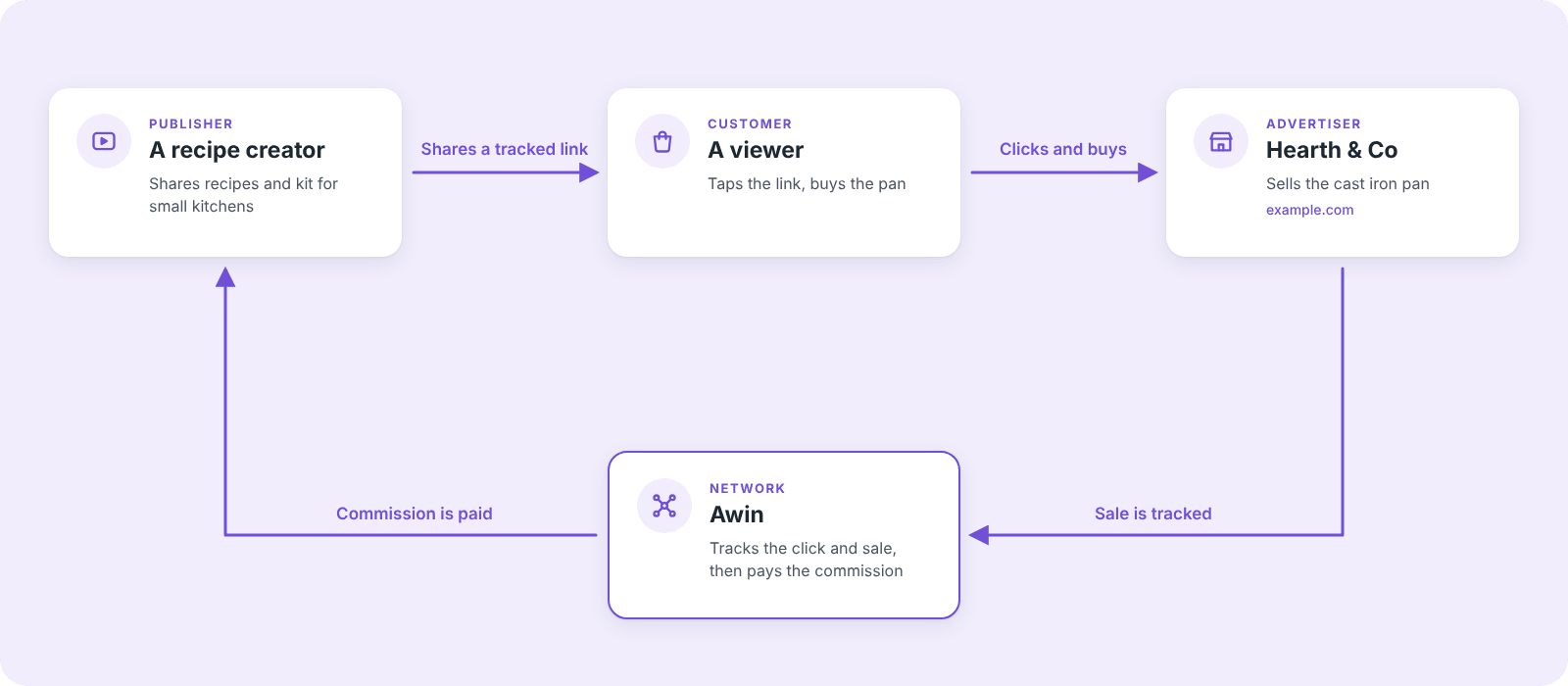
Brands usually work with lots of publishers at once, and publishers often promote several brands. An affiliate network keeps all of that in one place, which is why it shows up in every step of how affiliate marketing works.
How affiliate marketing works
Every affiliate sale follows the same five steps, whether it starts on a blog, a TikTok video or a cashback site. Here’s how it plays out for our recipe creator and Hearth & Co.
- Join a network and apply to brands. The creator signs up for free with an affiliate network like Awin, browses the brands on offer and applies to Hearth & Co’s affiliate programme. The brand looks at their content and audience, then approves the application.
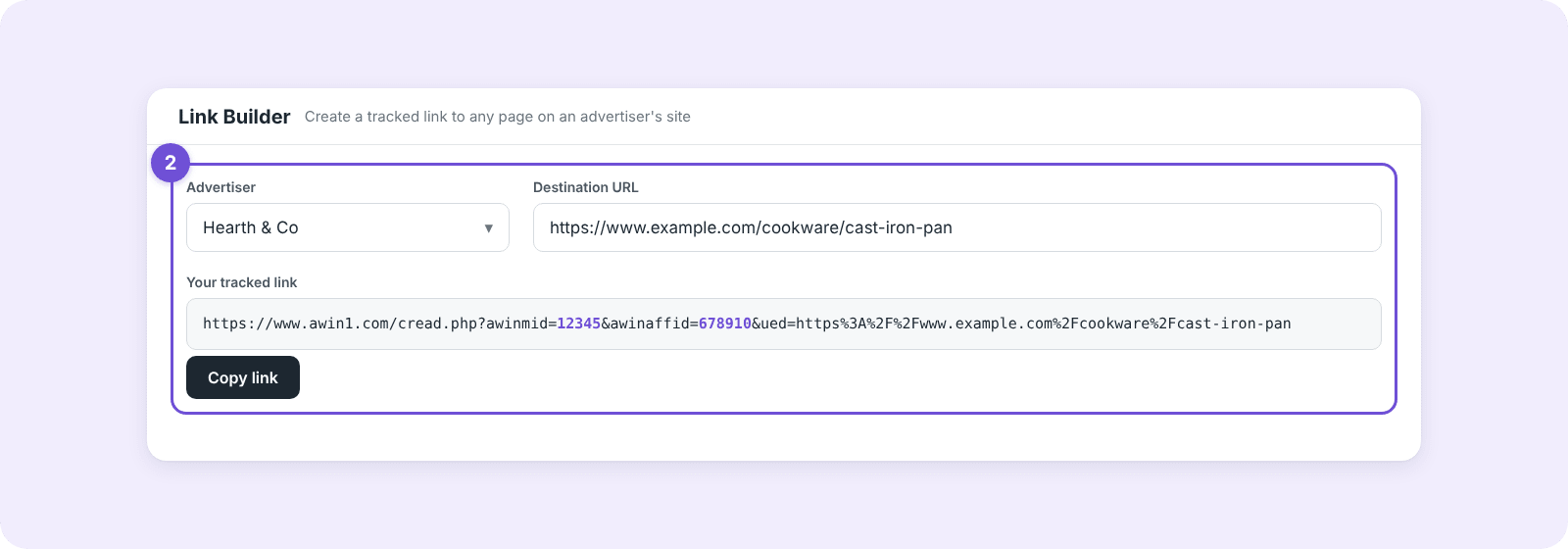
- Get a tracked link. Using Awin’s Link Builder, the creator turns the pan’s product page on example.com into a tracked link. Shoppers still land on the normal product page. The link also carries the creator’s unique ID, so the sale gets credited to the right person. Our guide to affiliate links goes deeper.
- Share it. The link goes wherever their audience hangs out: a recipe post, a video caption, a newsletter or a bio link. Each platform has its own rules on link placement, covered in social media affiliate marketing.
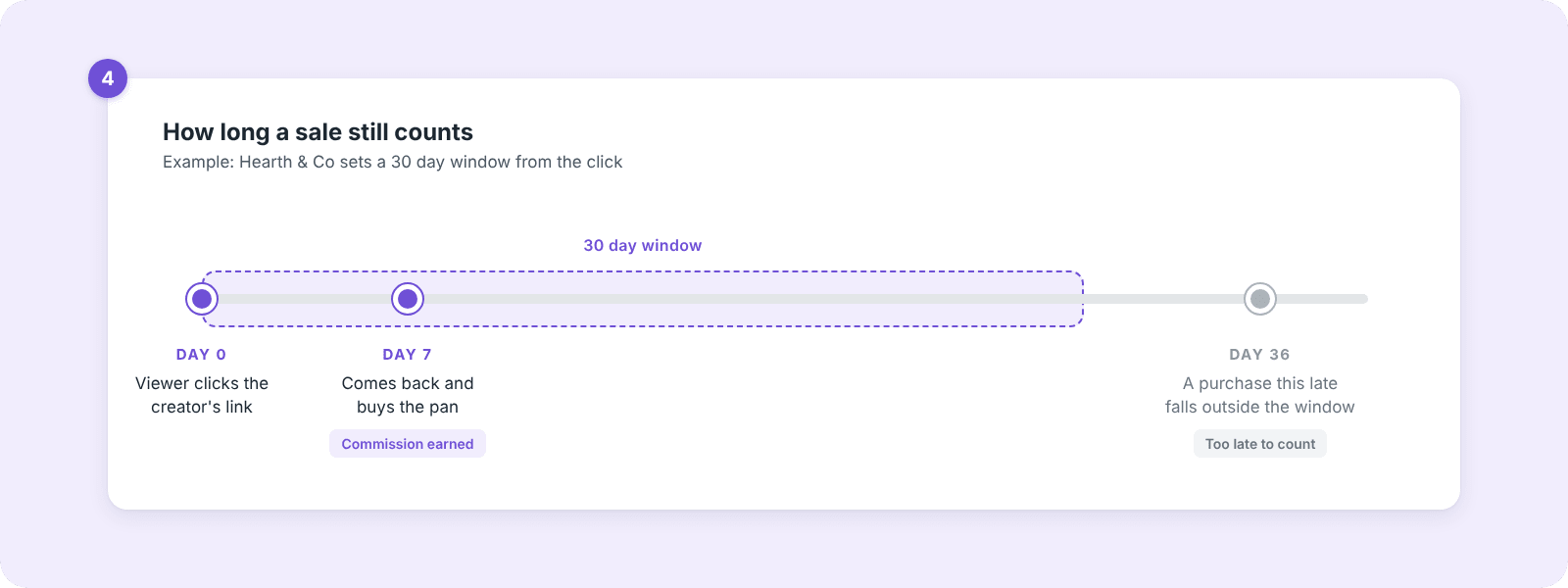
- A customer clicks and buys. A viewer taps the link and orders the pan. The click is recorded when they land, and Hearth & Co’s site reports the sale back to Awin. Brands set a window for how long a purchase still counts after the click, so a viewer who comes back a week later still counts as the creator’s sale. Here’s how affiliate tracking works if you want the detail.
- The sale is approved and commission is paid. The sale sits as pending while Hearth & Co checks it, and returned or cancelled orders get removed. Approval usually takes 30 to 45 days. After that, Awin pays the creator once or twice a month, depending on their payment settings.
The creator handles steps 2 and 3. The network looks after the tracking, the checking and the payments.
Advertisers, publishers and networks
You’ve met the four players. Here’s what each one does day to day, and what’s in it for them.
| What they do | What they get | In our example | |
|---|---|---|---|
| Advertiser | Runs the programme, sets commission rates and approves partners and sales | New customers, paying out when a sale or lead comes in | Hearth & Co sets a rate on cookware and approves the recipe creator |
| Publisher | Creates content and shares tracked links with their audience | Commission on every approved sale or lead | The recipe creator links the pan in videos and posts |
| Network | Connects both sides, tracks clicks and sales, monitors for fraud and handles payments | A fee from the advertiser, which keeps it free for publishers | Awin tracks the pan sale and pays the creator |
Brands can also run a programme themselves. Amazon Associates is the best known example: you sign up with Amazon directly and earn on Amazon products alone.
A network gives you thousands of brands through one account, with one dashboard for links and reports and one payment covering everything. Awin alone connects 30,000 advertisers with over a million publishers.
That’s why many publishers start with a network, and why brands use one to reach partners they’d struggle to find on their own.
How affiliates get paid
Each programme sets out what it pays for and how much. The brand decides the terms, and on Awin you can see a programme’s rates before you apply. Most commission falls into one of four models.
| You earn when | How it's paid | Example | |
|---|---|---|---|
| Pay per sale | Someone buys through your link | A percentage of the order or a fixed amount | 8% of every Hearth & Co order you send |
| Pay per lead | Someone signs up, books or requests a quote | A fixed amount per lead | A set fee when a reader books a kitchen design call |
| Pay per click | Someone clicks your link | A small amount per valid click | Usually run as a set campaign by the brand |
| Performance bonus | You hit a target the brand sets | Extra on top of your commission | A bonus for passing 50 sales in a month |
Pay per sale is the most common model. You’ll often see it called CPA, short for cost per acquisition, because the brand pays for each customer acquired.
Rates can also vary inside a single programme. Plenty of brands pay more for a new customer than a returning one, set different rates by product category, or offer a separate rate on sales that use a voucher code.
Sometimes more than one partner helps with a sale. A shopper might read a review, then come back later through a cashback site. The brand’s attribution rules decide who gets paid. Many programmes reward the last partner clicked, and some share commission with partners who helped earlier on.
Our guide to attribution models explains how that works.
Types of affiliates
Anyone with an audience can be an affiliate. Most fall into one of these groups, and plenty mix two or three.
- Content creators and influencers. Recipe videos, unboxings and outfit posts, with links in captions, bios and video descriptions. Trust in the creator does the selling. Many creators mix affiliate links with paid brand deals, so here’s how affiliate marketing and influencer marketing compare.
- Editorial and review sites. Magazines, blogs and “best of” lists that test and compare products. Readers arrive ready to buy, and the site earns when they act on a recommendation. More on how Awin works with editorial and media sites.
- Cashback and loyalty sites. Members shop through the site and get part of the commission back as cash or points. The site keeps the rest.
- Voucher code sites. Shoppers hunting for a discount find a code, click through and buy. Brands use them to close sales and bring back people who left items in their basket.
- Comparison sites. Side by side prices for things like insurance, broadband and energy. Since the customer signs up for a service, these often earn per lead.
- Newsletters and email lists. Writers recommending products to subscribers who already trust them. A small list can earn well when it’s tightly focused.
- Apps and browser extensions. Tools that surface offers or price checks while people shop, earning when a deal leads to a sale.
You’ll also hear affiliates sorted by how close they are to the product.
Unattached affiliates have no personal link to it and usually promote through paid ads. Related affiliates promote things within their niche. Involved affiliates have used the product themselves and recommend it from experience, which is the kind of trust that turns a click into a sale.
How much can you earn?
It depends on your niche, your audience and the time you put in. Here’s what Awin publishers earn in commission each month.
| Average monthly commission | All publishers | Content creators and influencers |
|---|---|---|
| Under €500 | 58.2% | 71.3% |
| €500 to €2,000 | 20.0% | 18.2% |
| €2,000 or more | 21.8% | 10.5% |
-Source: Awin publisher data, active publishers worldwide
Creators and publishers overall look surprisingly alike in the middle, with roughly one in five earning €500 to €2,000 a month. The gap opens at the top, where large cashback, voucher and media businesses operating at scale pull the “all publishers” figure up.
Money also takes a little while to arrive. As covered above, approval takes a few weeks, so plan for a gap of a month or two between your first sales and your first payout.
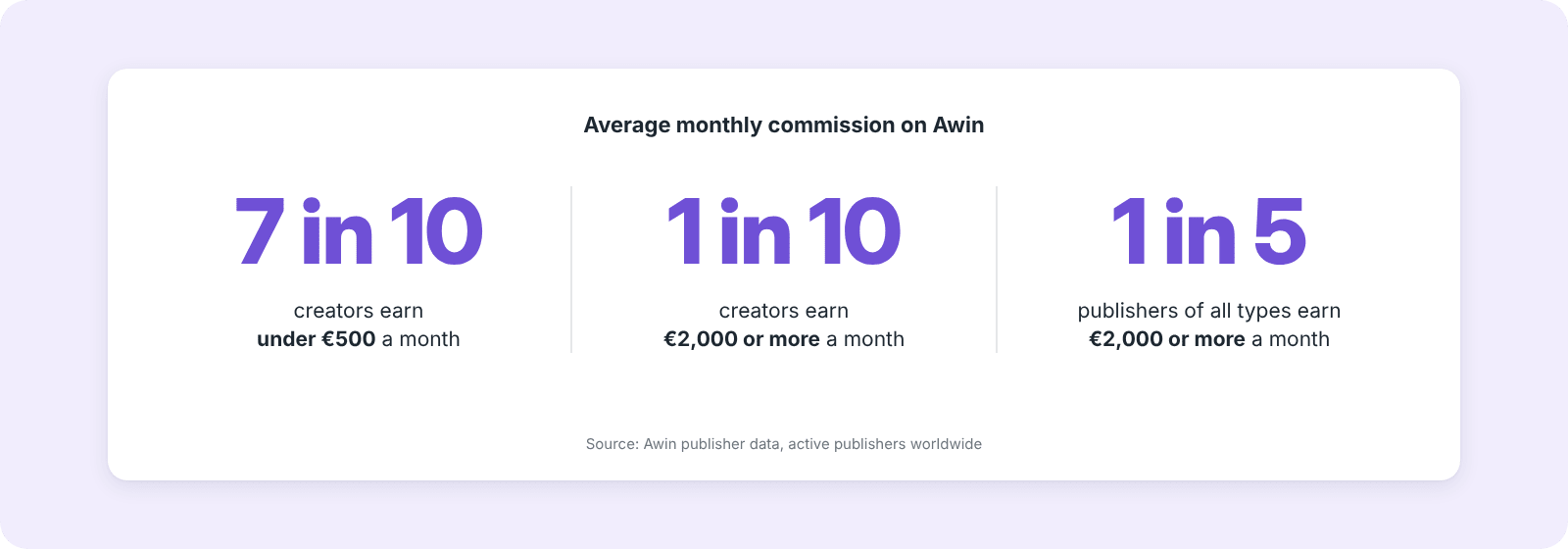
Everyone in this data is already making sales, so read it as a range to aim for. We break down the full numbers, and what moves them, in how to start affiliate marketing.
Affiliate marketing examples
The same brand can sell through very different affiliates. Here’s how three of them might earn from Hearth & Co.
- A review site’s “best cast iron pans” list. The writer tests six pans over a few months and ranks Hearth & Co’s first. Each pick links to its product page, and when a reader buys, the site earns a percentage of the order.
- A cashback site. A member already planning to buy a coffee machine clicks through from the cashback site first. Hearth & Co pays commission to the site, which passes part of it back to the member as cashback.
- A short video with a discount code. A kitchen organising creator shows off Hearth & Co’s knife block and shares a code for 10% off. Viewers type the code in at checkout, and the sale is credited to the creator through the code alone, even without a click on a link.
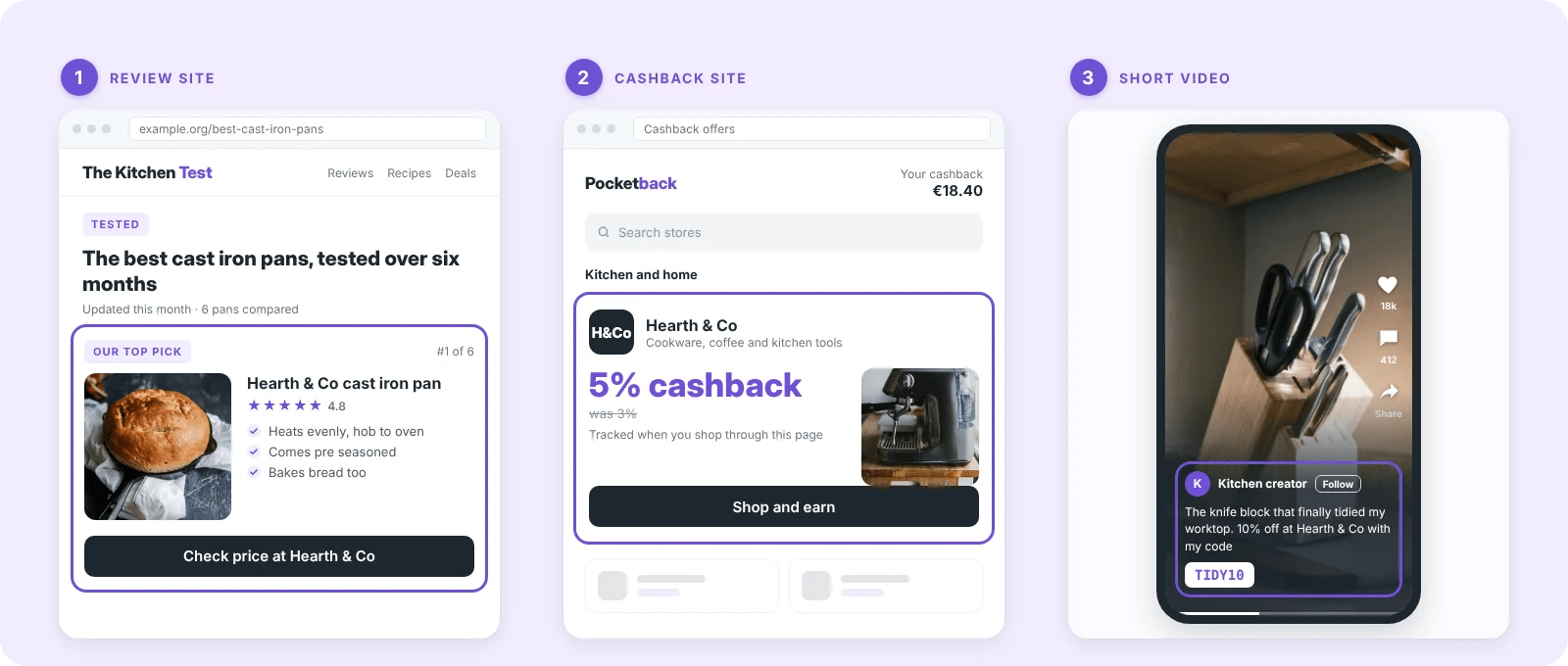
One brand, three routes to a sale. Pick the one that suits how you already create, then browse the Advertiser Directory to find real brands in your niche.
How affiliate marketing is changing
The basics above have held steady for years. Three things around them have moved fast, and they’re worth knowing before you start.
Creators have moved centre stage
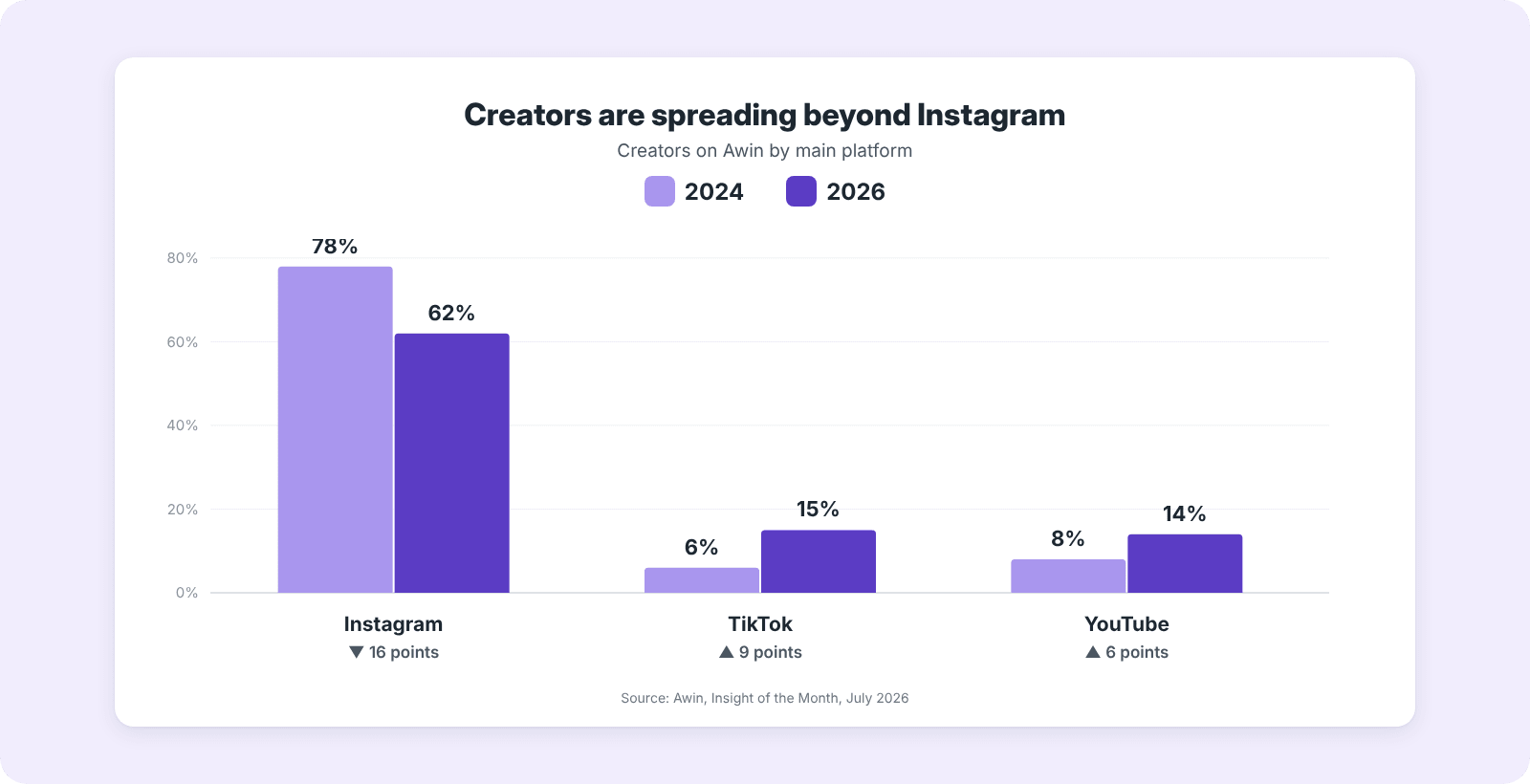
Influencers and bloggers are now the second most common partner type in Awin’s Power 100, its ranking of top performing partners, and their presence is up 180% since 2024. Sign ups through Awin’s creator app are running at double 2024 levels too.
Video is where the growth is. Since 2024, TikTok and YouTube have both roughly doubled their share of creators on Awin. Instagram is still the biggest, with its share down 16 points.
What has changed on both platforms is how easy it is to link products. TikTok creators can earn through TikTok Shop or with affiliate links in their bio, and YouTube creators can tag products right inside their videos.
In the UK, YouTube’s Shopping Affiliate Programme has run through Awin since July 2026. Our guides to TikTok affiliate marketing and YouTube affiliate marketing cover each one.
AI tools have started sending shoppers
More people now ask AI assistants like ChatGPT what to buy, then click through from the answer. It’s early days. In Awin’s data across the UK, US, Germany and France, 0.2 to 0.5% of affiliate sales include a click from an AI tool.
Those shoppers spend more, with basket values up to 119% higher depending on the market. Adobe reports that visits from AI tools to US retail sites convert at a 60% higher rate than other traffic. AI shopping now even has its own category in Awin’s Power 100.
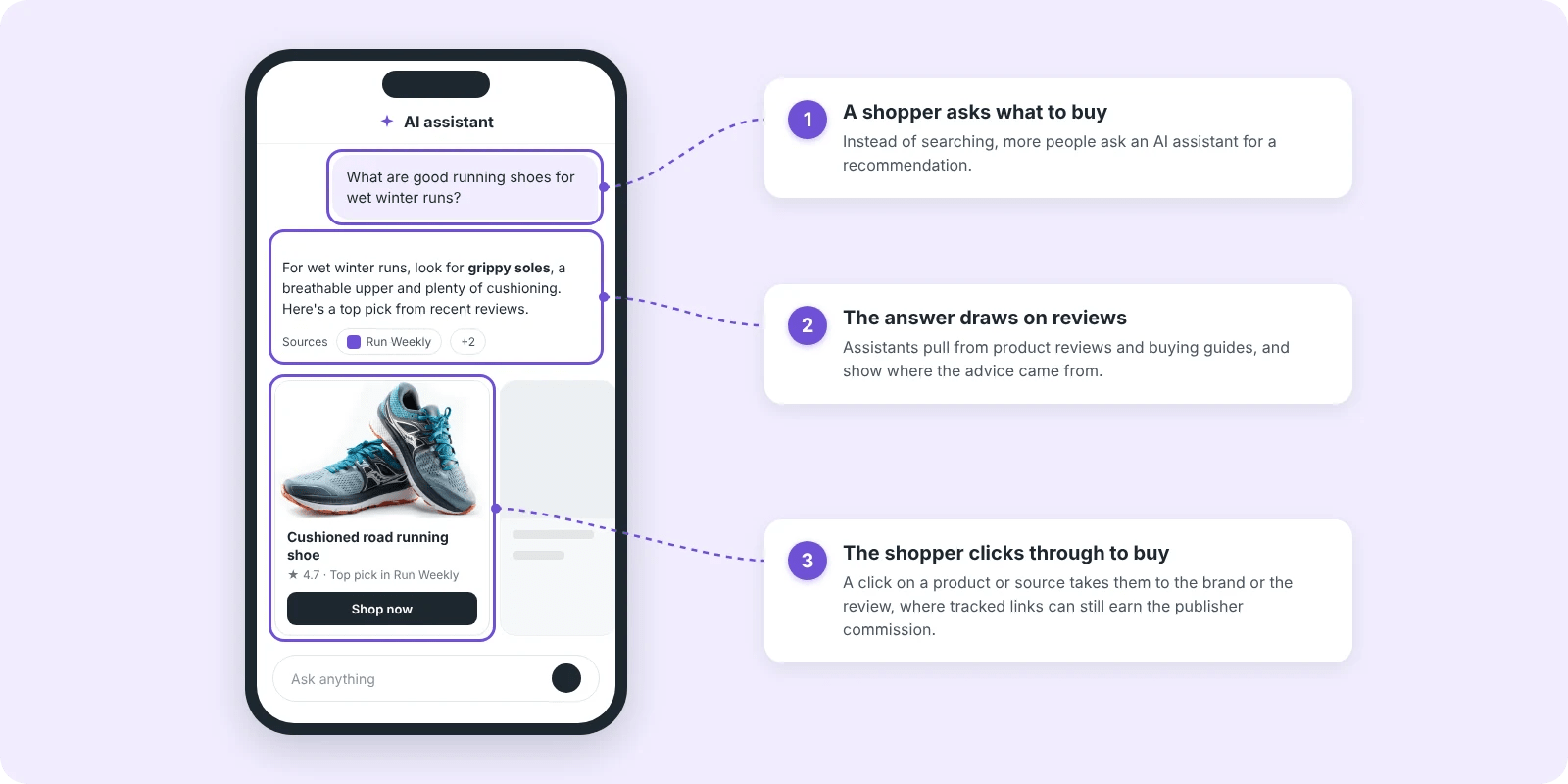
The takeaway for new affiliates: detailed, honest recommendations are worth the effort, whoever ends up reading them.
Tracking runs on servers as well as browsers
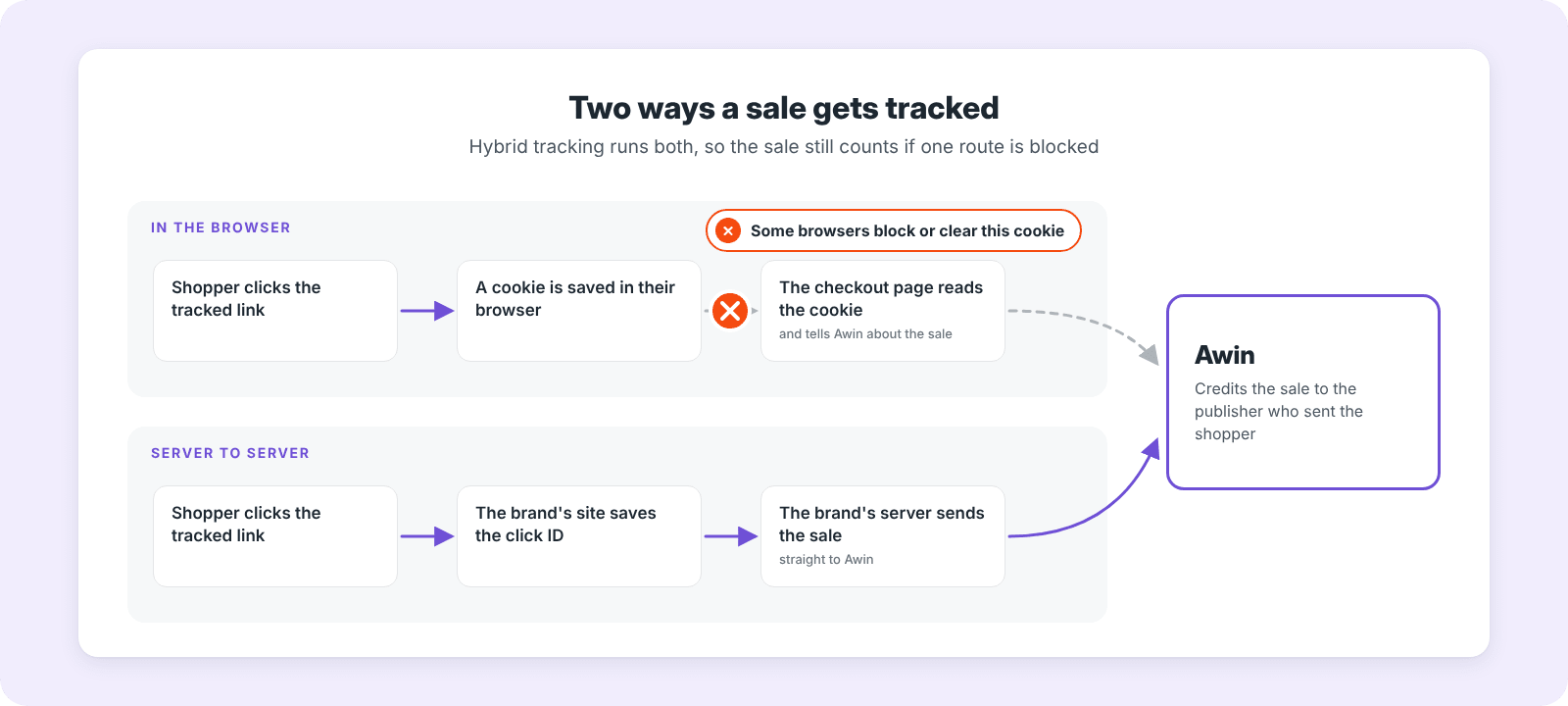
Browsers like Safari and Firefox already block third party cookies, the small files much of affiliate tracking used to rely on. To keep sales from slipping through, brands on Awin can pair browser tracking with server to server tracking, where the brand’s own system reports each sale straight to Awin.
Awin calls the combination hybrid tracking. For publishers, it means more of the sales you drive get credited to you.
Is affiliate marketing legal?
Yes. Affiliate marketing is legal and widely used around the world. The main rule is the same wherever you are: tell people when you earn from a link.
Regulators want readers to know a recommendation is paid before they act on it. The details vary by country, and the same principles show up in most of them:
- Use plain words. “Ad” or “I earn commission if you buy through my link” both work. The word “affiliate” on its own falls short, because many people don’t know what it means.
- Put the label up front. It belongs at the start of a post, caption or video, or right beside the link. A note at the bottom of the page or tucked away on an About page is easy to miss.
- Label every channel. Blog posts, videos, stories, social posts and newsletters all count.
- Keep your claims honest. Recommend products you’d stand behind and describe them accurately.
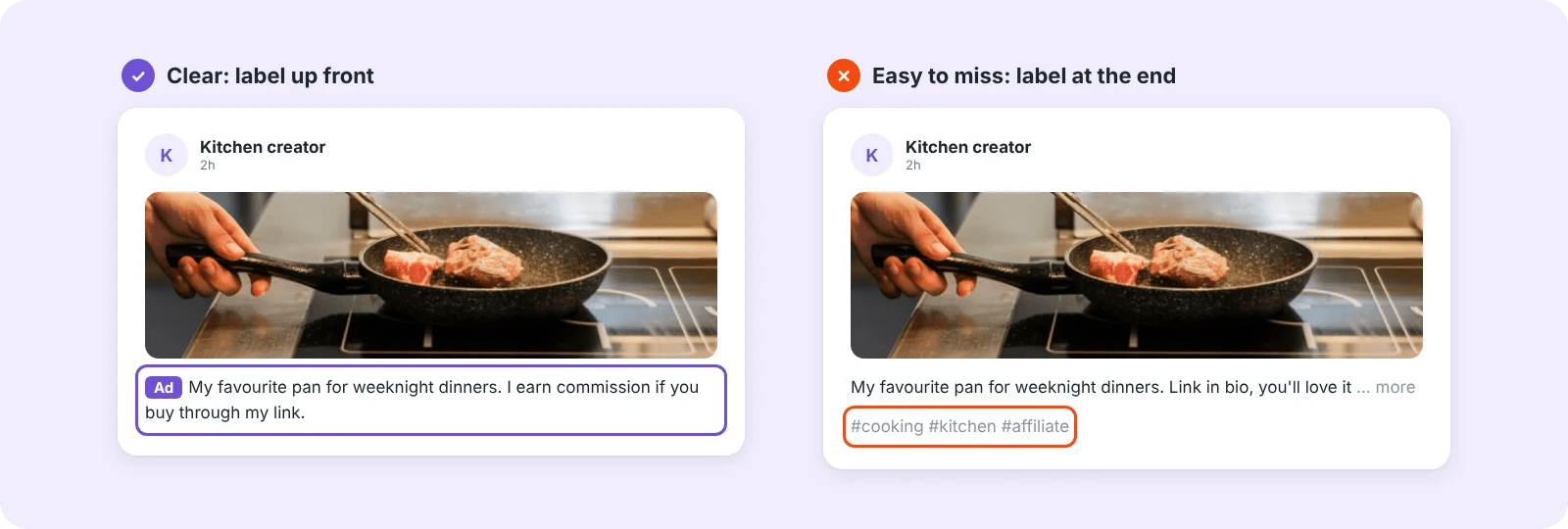
For the specifics, check the rules where you and your audience are. In the UK, the ASA’s affiliate marketing guidance covers labelling.
If you want to learn more about staying within the guidelines, our guide to affiliate disclosure walks through it step by step.
Common questions about affiliate marketing
What does an affiliate marketer actually do?
They find products their audience will like, create content recommending them (reviews, videos, posts or newsletters) and add tracked links. Then they check their reports to see what sells and do more of it. Most of the work is the content itself, since the network handles tracking and payments.
Does affiliate marketing still work?
Yes, at a big scale. In its last financial year, Awin’s network generated £18 billion in revenue for advertisers and £1.2 billion for the publishers promoting them. Brands keep investing because they pay for results, and publishers stay because good recommendations keep earning.
Can you start affiliate marketing with no money?
Yes. Joining a network like Awin is free, and so is applying to brands. A free social account or blog is enough to start sharing links. Spending can come later, on things like a domain name or better kit, and plenty of affiliates start with just a phone.
Do you need a website for affiliate marketing?
You can start without one. Many creators share links on social media, in videos or in newsletters. Brands look at where and how you publish when they review your application, so a site you own can help as you grow.
Is affiliate marketing the same as influencer marketing?
They overlap. Affiliate marketing pays for results, like a sale or a sign up. Influencer marketing usually pays a creator a set fee for a post, however much it sells. Many creators do both, and some deals mix a fee with commission.
Your first steps in affiliate marketing
You should be pretty clued up by now. Time to put it into action, starting with these four steps.
- Pick your niche and channel. Choose a topic you know well and the place your audience already spends time, whether that’s a blog, TikTok, YouTube or a newsletter.
- Join a network. One free account opens up thousands of brands to choose from.
- Apply to brands that fit. Look for products your audience would actually buy, and check each programme’s commission rate and tracking window before you apply.
- Create, share and learn. Post honest recommendations with clear labels, then use your reports to spot what works.
For a deeper walkthrough, our full guide on how to start affiliate marketing takes each step in detail.
Ready to begin? Create your free Awin publisher account and start browsing brands today.
Running a brand instead? See how Awin can connect you with the right partners.