The Q3 Wrap: Brand Partnerships and Retail Media
Written by Lee Metters on 5 minute read
Yes, we really are three-quarters into 2026. Lee Metters recaps a busy past few months for retail media and brand partnerships.

This quarter, we got a reality check. According to WARC’s latest index, retail media growth is slowing. Only slightly, but significantly, growth in 2027 is expected to be down to single digits. That would equate to the lowest levels we’ve seen since 2020.
If we view the trend line as a sign of a maturing channel, where popular environments are becoming more crowded, advertisers are having to think long and hard about where their dollars go.
On Awin, we’re noticing more spend being dedicated to offline campaigns, while podcast advertising presents a net-new retail media opportunity for advertisers to exploit.
Retailers have issued their own response by bolstering their supply of inventory, with brands like Very, JD Sports, Matalan, and Evri all launching new units in Q3.
You can learn all about that below. And if you’d like to get started with brand partnerships, let’s talk.
1. Retail media growth slows despite $200 billion milestone
According to WARC, retail media remains one of advertising's biggest success stories, with global spend expected to surpass $200 billion in 2026.
It’ll account for more than 15% of worldwide ad investment by 2027. However, growth is beginning to slow.
WARC forecasts sub-10% growth outside of spend on Amazon by the end of 2027.
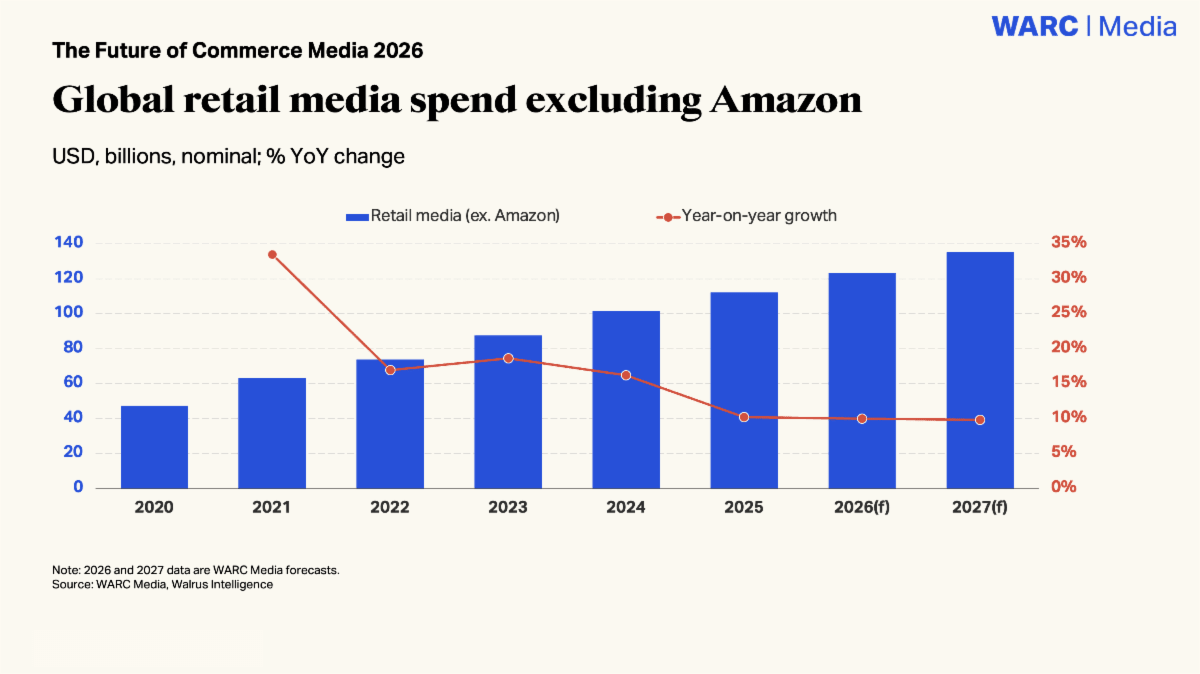 Much of this slowdown can be attributed to market concentration. Amazon now captures the vast majority of retail media investment across both the US and Europe's largest markets, leaving smaller retail media networks competing for a relatively small share of spend.
As a result, many retailers are facing a critical challenge, how do you continue growing advertising revenues when more players are fighting for the same audiences?
Here’s what I think
The opportunity may lie beyond traditional advertising. As AI-powered discovery and zero-click search reshape online shopping journeys, retailers are increasingly exploring different ways to monetize customer attention.
Strategic brand partnerships, non-endemic advertising, and checkout-based promotions offer opportunities outside of the conventional on-site formats that now seem more crowded than ever.
That will in turn broaden advertiser demand and extend retail media beyond the point of purchase.
2. Supplier funding just entered the room
Part of my enjoyment of wrapping the past quarter comes from reflecting on all the things Awin advertisers are doing on our platform, and the way their actions reflect wider trends.
As shopping journeys become increasingly fragmented across AI tools, creator content, review sites and social platforms, retailers are being given fewer opportunities to influence purchasing decisions solely within their own environments.
I think you can guess where I’m going with this one...
The next growth opportunity for retail media could be extending supplier-funded investment beyond retailer websites and apps, using trusted affiliate partners to engage consumers earlier in the purchase journey.
Currys recently demonstrated what this could look like. Rather than relying exclusively on on-site media placements during a campaign for LG TVs, Currys expanded its retail media investment across a carefully selected network of affiliate partners.
Trusted editorial publishers such as Future and The Independent drove awareness and product consideration through expert reviews of LG TVs, while display activity re-engaged shoppers who had already expressed interest. Cashback, coupon and Buy Now Pay Later partnerships then helped convert that demand into sales.
Instead of targeting customers at a single point in the journey, the campaign was designed to support the entire path from product discovery through to purchase.
Here’s what I think:
The results (case study dropping soon!) highlight the potential of a broader performance retail media model. More importantly though, they show how supplier budgets can be activated beyond a retailer's own properties while maintaining clear measurement and accountability.
As discovery shifts further away from retailer websites, performance-driven affiliate partnerships offer a scalable way for retail media networks to capture intent earlier, influence consideration more effectively and unlock incremental growth that traditional on-site placements alone cannot achieve.
3. Could podcast advertising be the savior?
Q3 got us thinking even harder about the next wave of retail media inventory. And for that, we’re thankful.
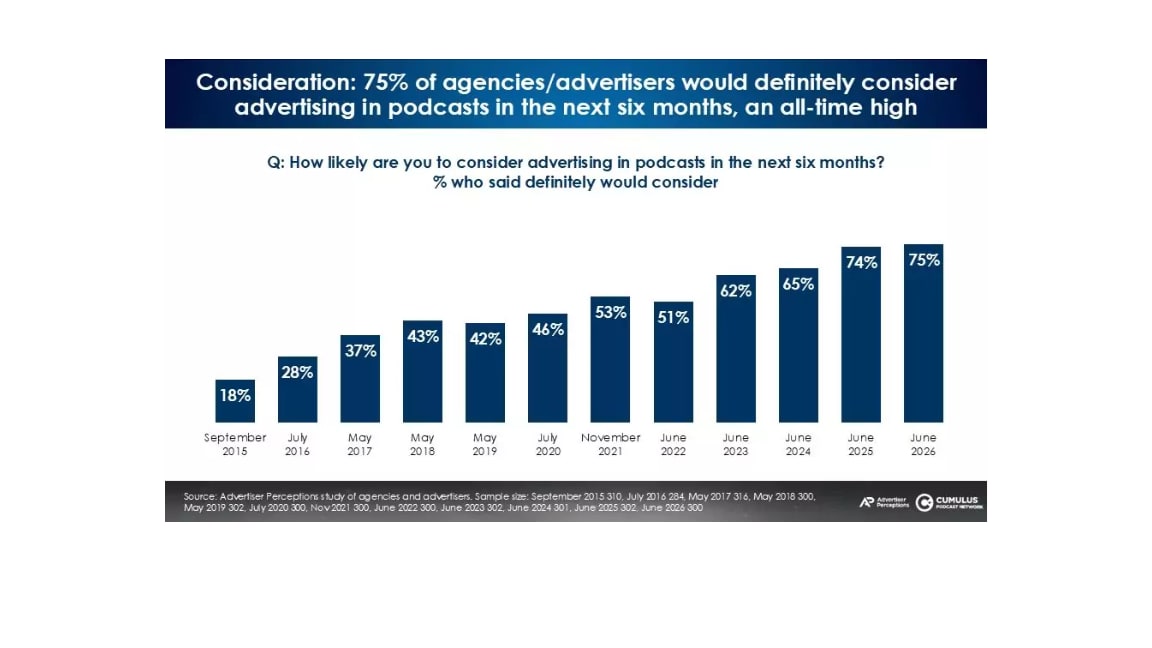
Podcasts are booming. And in Q3, we learned that the consideration of podcast advertising is at a 12-year-high, with 75% of brands and agencies actively planning to make an investment in the next six months.
That got me thinking.
Despite the interest from investors, many content creators are falling back on a familiar monetization strategy of increasing ad inventory. The result is a growing advertising load that risks undermining the very thing that makes podcasts valuable in the first place.
Unlike many digital advertising channels, podcast audiences actively opt into content and develop genuine affinity with creators over time. Despite the sky-high levels of trust, many podcast monetization models still charge for impressions rather than outcomes.
While podcast advertising clearly influences consumer behavior, the challenge is ensuring that influence is monetized in a way that benefits creators, advertisers and listeners alike.
Here’s what I think:
Retail media, when activated through affiliate marketing, presents a compelling solution.
Rather than monetizing attention, creators can monetize action by partnering with brands that genuinely resonate with their audiences and earning revenue when listeners make a purchase, sign up to a subscription, or similar.
From curated product recommendations and dedicated storefronts to tracked offers and commerce integrations, podcasts have the potential to evolve into a performance-driven retail media channel. Creators still get control over the brands they promote, advertisers gain clearer measurement, and audiences receive recommendations that feel like a natural extension of the trusted relationship they have already built with the host.
Feels like a winner to me.
There’s plenty more where this came from
Follow me on LinkedIn for more insights and analysis, or explore the latest brand partnership opportunities on Awin.