Instagram Affiliate Marketing: How to Make Money
Written by Edward Cranmer on 11 minute read
How Instagram affiliate marketing works, other ways to earn, and how to get started earning commission.

There is more than one way to earn money on Instagram, from sponsored posts to selling your own products. Among the most accessible is affiliate marketing, where you earn commission by recommending products you already use, with nothing of your own to create or ship.
This guide covers the main ways creators make money here, how affiliate marketing works on the platform, where your links can go, and what the UK rules require.
Most creators combine several income streams. Sponsored content still brings in the biggest share, according to eMarketer.
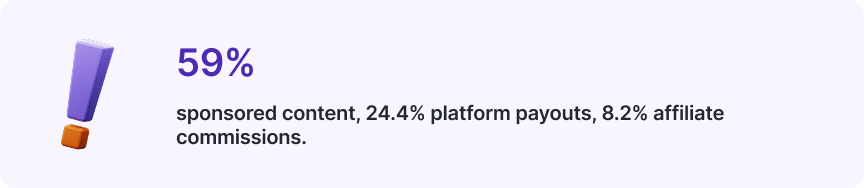
-Source: eMarketer, 2026
Ways to make money on Instagram
Earning here usually falls into a mix of affiliate marketing and influencer marketing, with many creators doing some of both.
Sponsored posts. Brands pay a fee to feature a product in your content. This suits accounts with an established following, and it tends to be the first paid opportunity offered as an account grows.
Selling your own products or services. Physical products, digital downloads, coaching and courses sold direct to your audience. More upfront work goes into building or sourcing something, with the return that everything you earn stays yours.
Subscriptions. Instagram's own feature lets followers pay monthly for exclusive content. A smaller stream on its own, working best alongside other methods.
Brand ambassadorships. An ongoing relationship with one brand rather than a single post. Income arrives more consistently, and earning one takes time, since brands look for reliability before committing.
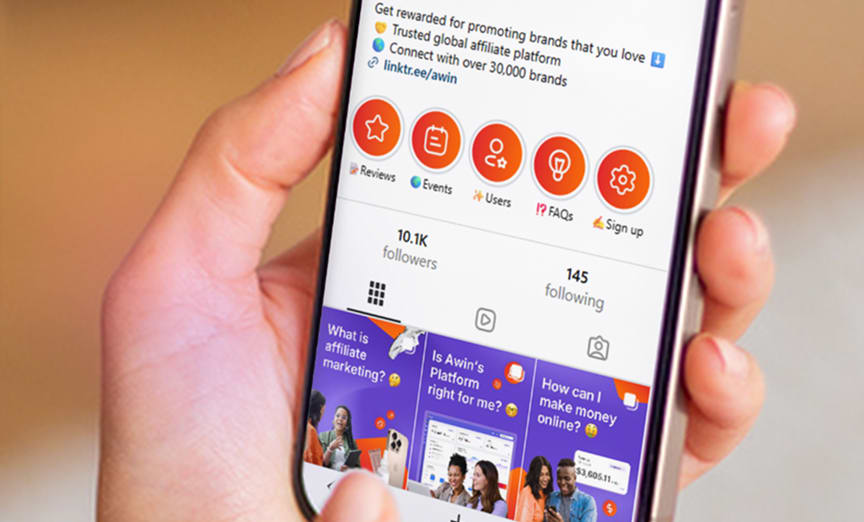
Affiliate marketing. Commission earned by sharing products through affiliate link tracking, often from a link in your bio, with no product to build and no fee to negotiate. Most programmes set no follower minimum, which makes this the easiest of the five to start.
Anything you build here transfers. The same content, the same links and often the same account settings carry across to Facebook affiliate marketing, since both run through Meta and share a Professional Dashboard.
What is Instagram affiliate marketing?
The mechanics match how affiliate marketing works anywhere else. You get a unique link, someone buys through it, and you earn a percentage of what they spend. Instagram decides where that link can sit.
A creator features a product in a Reel or a Story, adds a trackable link, and earns on any sale that follows. Stock, shipping and returns all stay with the retailer. Some programmes set a minimum follower count, and plenty accept accounts of any size.
If you post across several platforms, our guide to social media affiliate marketing covers what changes on each.
Setting up your account
- Switch to a professional account
Creator and Business accounts both unlock insights showing which posts drive profile visits and link taps. Switching is free, reversible, and sits in your settings under Account type.
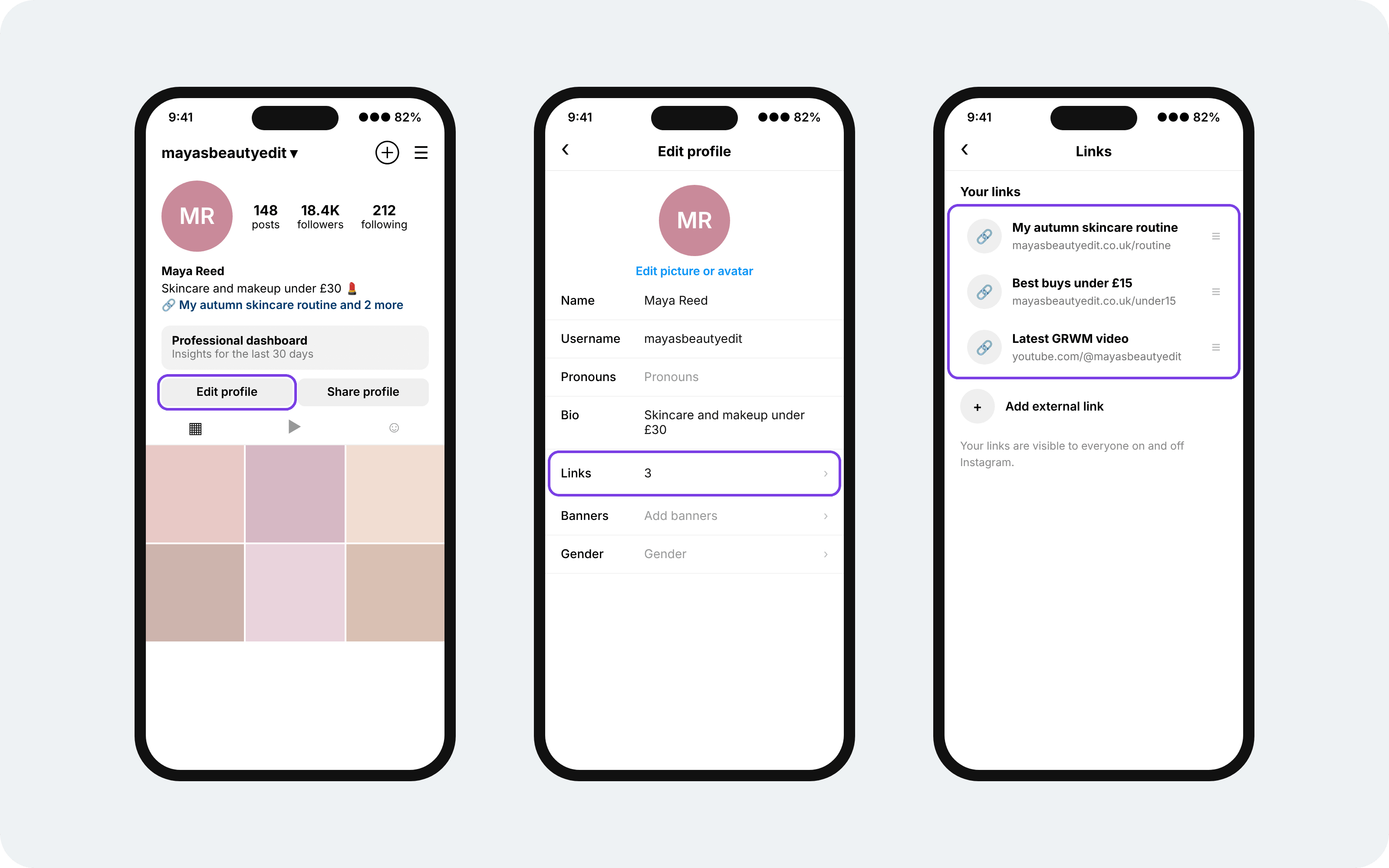
- Add up to five links to your bio
Instagram holds several links in the bio rather than one, each with a custom title. The top one displays by default and the rest sit behind a tap, so order them by what you are promoting now.
- Set up Highlights before you post any Stories
Stories disappear after 24 hours, taking their link stickers with them. A Highlight keeps the slide on your profile for as long as you leave it there, which turns a one-day placement into a permanent one.
- Join a network and name your handle
Applications ask where you post and what about. Give your handle, your follower count and the categories you cover, since an account with a clear subject reads better to a brand than one covering everything.
- Generate your links and check them in the app
Create a tracking link for the exact product page you want people to reach. Instagram opens links in its own browser, so tap through from your own profile and confirm the click reaches your reporting before you rely on it.
Browse what runs in your categories before applying. The Advertiser Directory lets you browse affiliate programmes by niche and see what each brand pays.
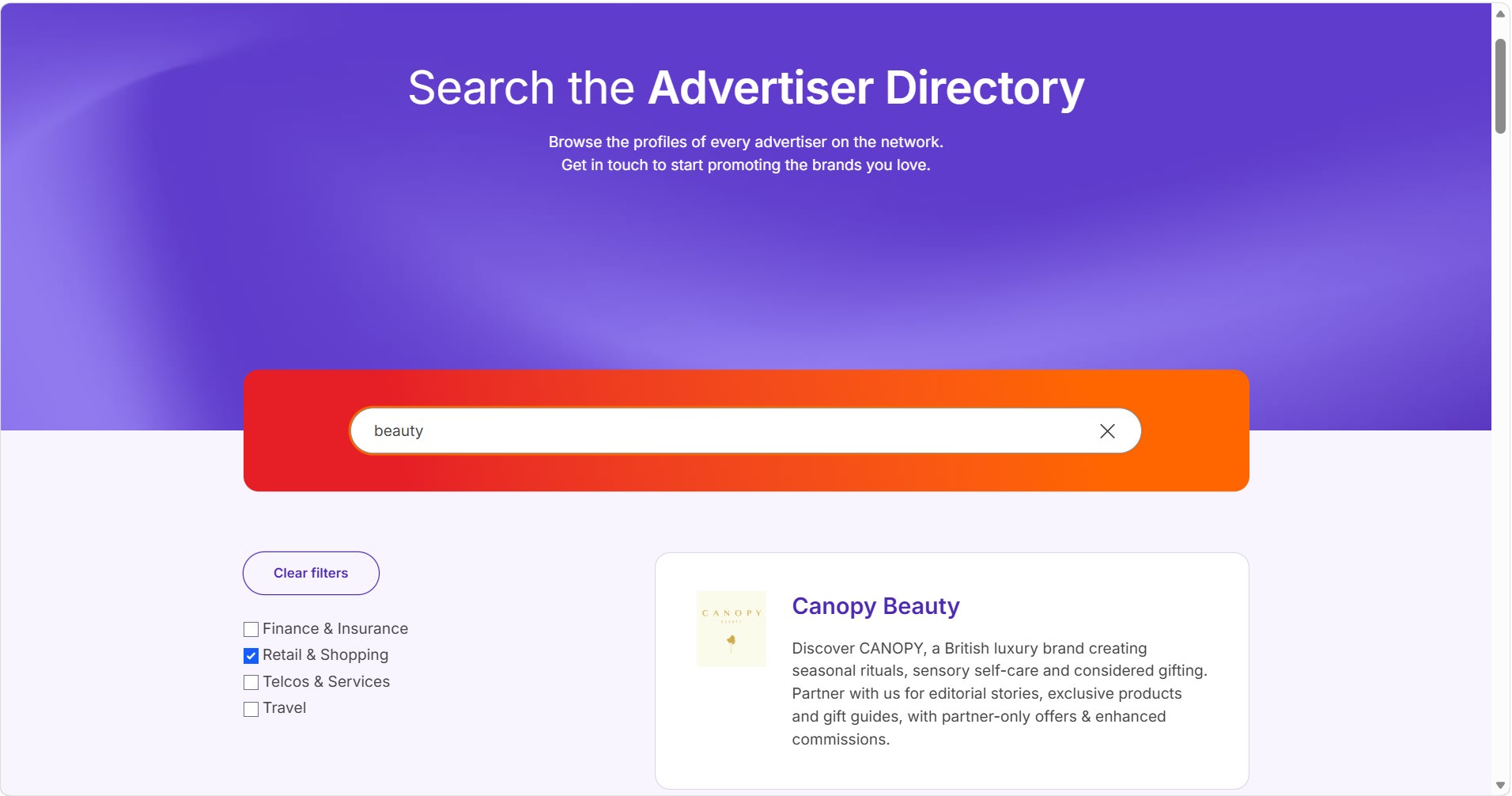
Registration is free. Create your free Awin publisher account and see which brands fit your audience.
Where your links go
Placement decides how many people ever reach your link.
| Placement | How to share your link | Watch out for |
|---|---|---|
| Bio | Add it as one of your bio links, ordered by what you are promoting | Only the top link shows without a tap |
| Stories | Attach a link sticker and rewrite the sticker text as a call to action | Gone after 24 hours unless saved to a Highlight |
| Reels and Posts | Captions hold no clickable link, so point people to your bio | An extra step between the content and the purchase |
| Broadcast channels | Share links direct to followers who opted in | Reaches subscribers only |
The gap between a Story and a Post is worth understanding before you plan anything. A link sticker sits on top of the content someone is already watching. A caption asks them to leave, find your profile and tap again, which loses most of them on the way.
Sharing affiliate links in Stories
Stories carry most creator links, since the sticker works on any account with no follower requirement. Find it in the sticker tray while editing, paste your tracking link in, then rewrite the sticker text so it reads as an instruction rather than a URL.
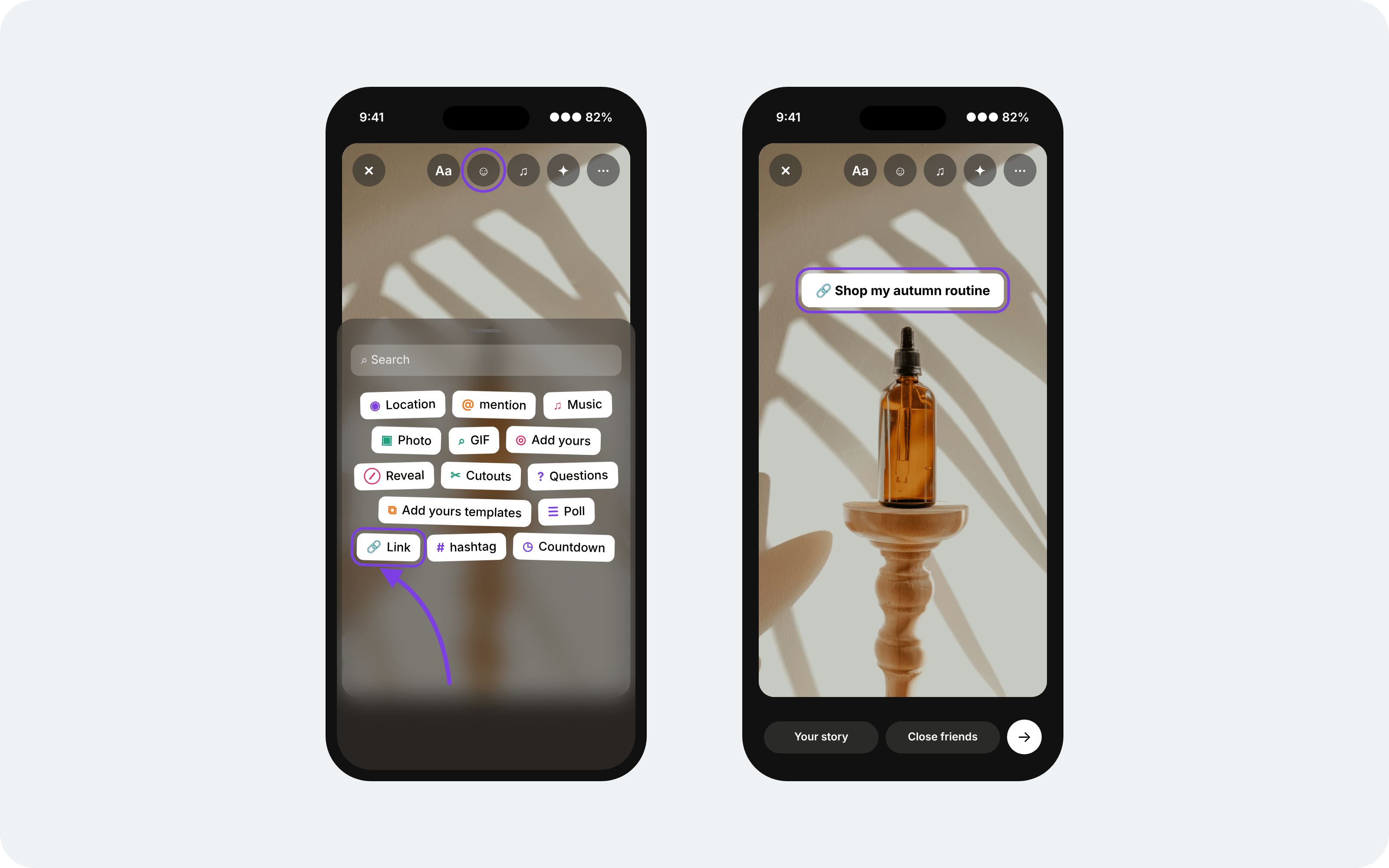
Two details shape how you use them. One sticker goes on each slide, so a sequence can carry a different product per frame. Everything vanishes at 24 hours, which is why a Highlight matters for anything worth keeping.
Reels behave differently again. A vertical video made here runs on other platforms with almost no editing, and affiliate marketing on TikTok covers how placement changes when you post the same clip there.
What earns on Instagram
Products shown in use. A Reel demonstrating how something works converts ahead of a still image with a caption. Movement holds attention long enough for the recommendation to land.
Honest reviews. Naming what a product does badly makes the rest believable. Audiences here notice a forced recommendation quickly, and trust drops faster than it builds.
Repeat formats. A weekly series your followers recognise builds faster than scattered one offs, since people who know what is coming return for it.
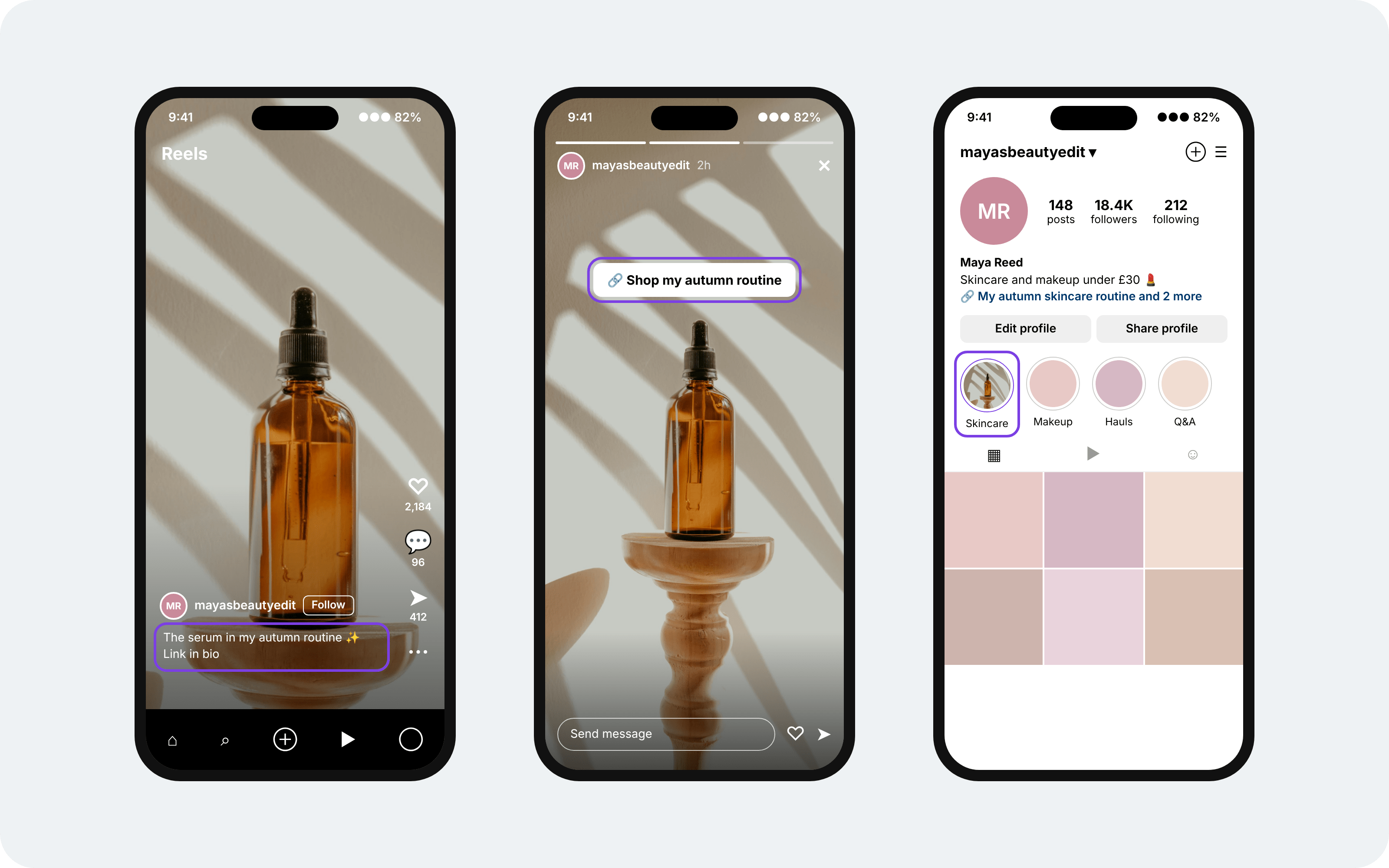
Several formats together. Stories reach people checking in, Reels reach people scrolling, Highlights reach anyone landing on your profile later. Using one leaves the other two empty.
A current bio. Your bio links are the only permanent placement you own, so swap them to match whatever you are promoting rather than leaving last month's campaign sitting there.
Match the product to what people already follow you for. A skincare account converts on skincare and earns nothing on kitchen equipment, whatever the commission rate looks like.
Disclosure on Instagram
Anything you earn from has to read as commercial before someone gets into it. Instagram gives you a built-in label, and on its own it leaves gaps.
- Turn on the paid partnership label where a brand has paid you directly, which adds a line above your content
- Write "ad" or "#ad" in your own words as well, which the ASA accepts where terms like affiliate and gifted fall short
- Put it on screen in Stories, above the link sticker, so it appears before anyone taps
- Say it out loud in Reels, since sound on viewers rarely read a caption
The paid partnership label covers brand deals rather than commission, so affiliate content needs your own wording either way.
Flat fees for posts work on different terms. Our influencer partnerships hub sets out how those arrangements run.
The ASA publishes detailed guidance on labelling affiliate content.
What to expect
Early numbers stay small while you work out what your audience responds to. Most creators describe a few pounds in the first month, building once they settle on two or three products that already sell.
Content here has a short life. A Reel does most of its work within 48 hours, a Story lasts a day, and both stop earning once the feed moves on. That puts the weight on posting rhythm rather than on any single upload. Search driven platforms behave differently, and Pinterest affiliate marketing covers how one pin keeps returning traffic months later.
Two figures tell you where a problem sits. Link taps show whether people are finding your placement. Sales against those taps show whether the product suited the audience.
Instagram affiliate marketing FAQs
Do you need a lot of followers to start?
Not necessarily. A few programmes set a minimum, though most have no requirement at all. Engagement and audience fit matter far more to advertisers than raw follower count.
Is Instagram affiliate marketing free to start?
Yes. Joining programmes through Awin costs nothing. You earn commission on the sales or leads you generate, with no fee to get set up.
How much can you earn from Instagram affiliate marketing?
It varies widely depending on your audience, niche, and the commission rates set by individual programmes. No fixed amount exists, since every advertiser sets its own rate.
Do you need a website as well as Instagram?
No. Your bio links, Stories and Reels carry affiliate links on their own. A site or blog helps if you want to build content beyond the platform, added later by many creators.
Can you put affiliate links in Instagram captions?
No. Captions display links as plain text with no tap through, so your bio and Story stickers carry everything. Some creators name the product in a caption and direct people to the bio from there.
Do you need a professional account for affiliate links?
No. Link stickers and bio links work on personal accounts. A professional account adds the insights that show which placements earn, which is why most creators switch early.
Ready to start
Pick a product you already own and post about regularly. Add it to your bio links, feature it in a Story with a sticker, and check the tap registers in your reporting.
Consistency does more here than volume. Posting about one category three times a week teaches you more than covering five.
Brands across every niche run programmes on the network. Sign up and start earning commission