Affiliate Marketing on LinkedIn: What Sells and Why
Written by Edward Cranmer on 14 minute read
Who LinkedIn works for, what the platform rules allow, and why B2B products behave differently from consumer ones.

LinkedIn works in a different way to other social platforms. Nobody opens it looking for something to buy. They open it to keep up with their industry, find work, or solve a problem that came up at their desk.
That changes what affiliate marketing looks like here. Recommendations land when they come from someone who clearly knows the subject. A single sale can be worth dozens of consumer purchases, particularly on software billed monthly.
This guide covers who LinkedIn suits, what the platform allows, which products move, and how B2B commission differs from anything you have promoted elsewhere. For the mechanics behind all of it, start with affiliate marketing.
Is LinkedIn worth it for affiliate marketing?
For most people promoting consumer products, no. For anyone working in or around software, recruitment, finance, marketing or professional services, it can outperform every other platform they use.
The split comes down to what your audience buys at work rather than at home.
| Works well | Struggles | |
|---|---|---|
| Product type | Software, courses, certifications, professional services | Fashion, beauty, homeware, gadgets |
| Audience | People with a budget or influence over one | General consumers |
| Time to first sale | Weeks to months | Days to weeks |
| Order value | High, often recurring | Low, one off |
| Content style | Written insight, case studies, honest experience | Photos and short video |
Someone browsing Pinterest for home and lifestyle products is often one click from buying. On LinkedIn the same person justifies the spend to a manager, runs a trial, and involves two colleagues before anything gets signed.
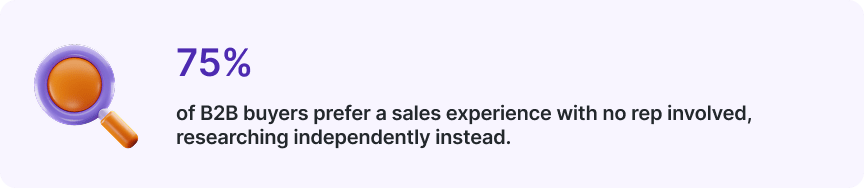
-Source: Gartner, The B2B Buying Journey
That gap is where affiliate content works. Someone researching a tool without wanting a sales call still needs someone to trust, and a post from a person doing the job carries more weight than a vendor page.
That makes the first few months quiet. It also means the audience you build is worth considerably more per head, and a recommendation you make once can pay for as long as the subscription runs.
Anyone selling to consumers rather than businesses will do better elsewhere. Our guide to affiliate marketing on social media compares what each platform allows.
What LinkedIn allows
Affiliate links are permitted. LinkedIn has no affiliate specific policy, and any guide referring to LinkedIn affiliate programme guidelines is describing something that does not exist.
What governs your posts is the User Agreement and the Professional Community Policies, which cover the whole platform. Three rules matter here:
- No spam. Unsolicited promotional messages breach the Professional Community Policies, which puts mass DMing your connections firmly out of bounds
- Nothing misleading. Claims about results, earnings or what a product does need to hold up
- No automation. Bots and unauthorised tools for posting or messaging are prohibited, however convenient they look
Enforcement runs in stages. LinkedIn can limit who sees a post, label it, or remove it, and repeated breaches restrict the account.
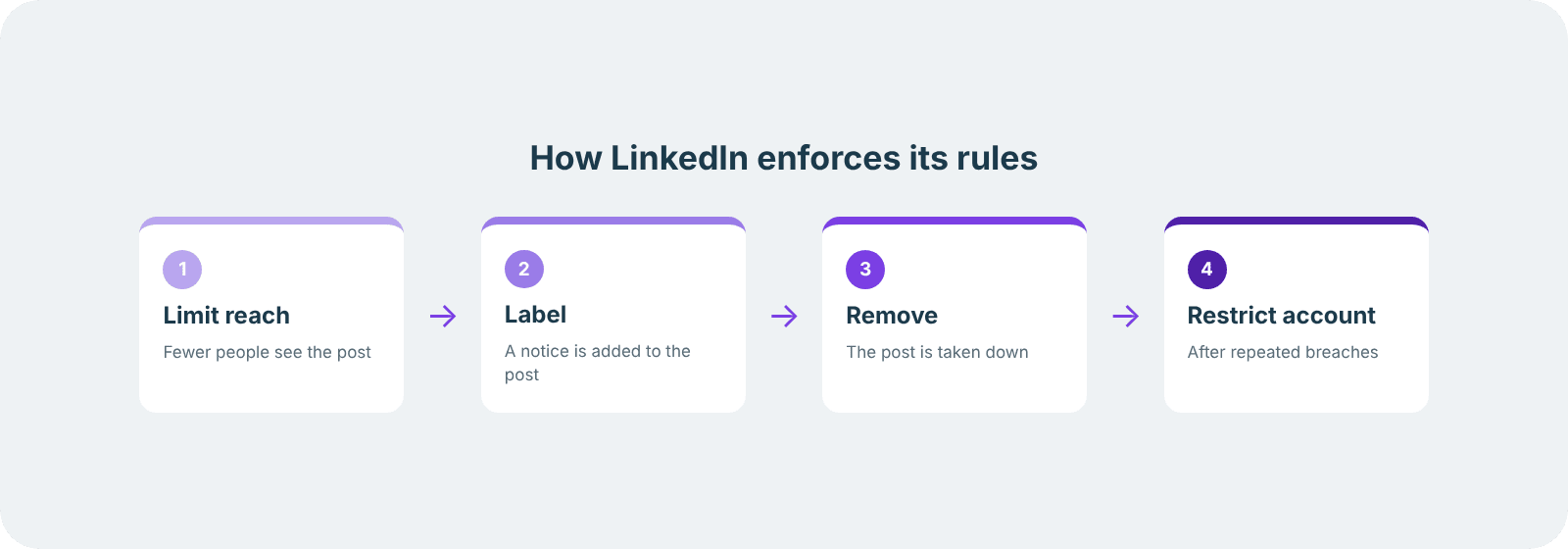
None of these rules blocks affiliate marketing. The practical constraint is that anything reading as promotional gets treated as promotional, which is why the approach below matters more here than on any other platform.
The full rules sit in the LinkedIn User Agreement.
What sells on LinkedIn
- Software and SaaS. The strongest category by some distance. Subscriptions pay recurring commission, buyers renew for years, and LinkedIn is where people go looking for tools that solve a work problem.
- Courses and certifications. Career progression drives a lot of activity here, so anything helping someone qualify or specialise finds an audience already thinking about it.
- Professional services. Accountancy, legal, recruitment, insurance for contractors. High value, and often bought by people who found the recommendation through someone they trust.
- Business hardware and equipment. Standing desks, monitors, conference kit. Lower value than software, though the audience buys it on a company card rather than their own.
What struggles is anything bought on impulse. Fashion, beauty and homeware need visual formats and a feed built for browsing, so the same product posted to LinkedIn reads as out of place.
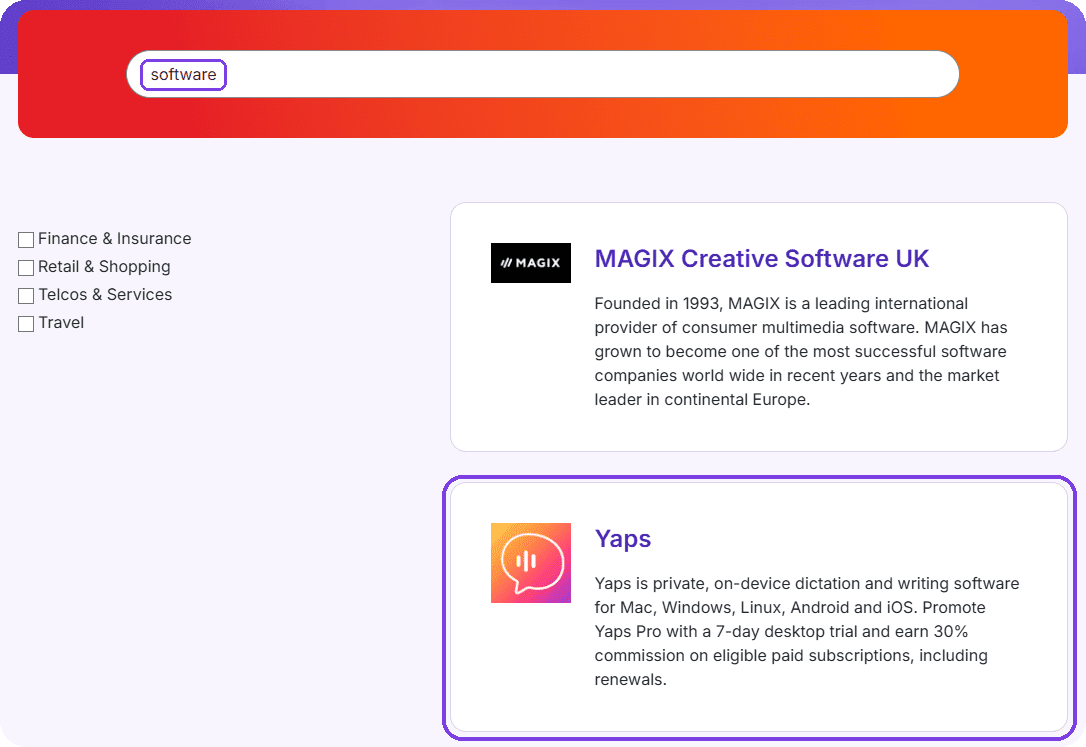
Worth checking what is available in your sector before committing. The Advertiser Directory lets you filter programmes by category to see which software and service brands run affiliate programmes.
Software sells well on video too, where a walkthrough shows the tool doing the job. Our guide to YouTube affiliate marketing covers how that content earns.
Where your links go
LinkedIn gives you more placement options than most platforms, and each carries a different risk of reading as promotional.
| Placement | How it works | Watch out for |
|---|---|---|
| Post body | Link sits in the text | External links may reduce reach |
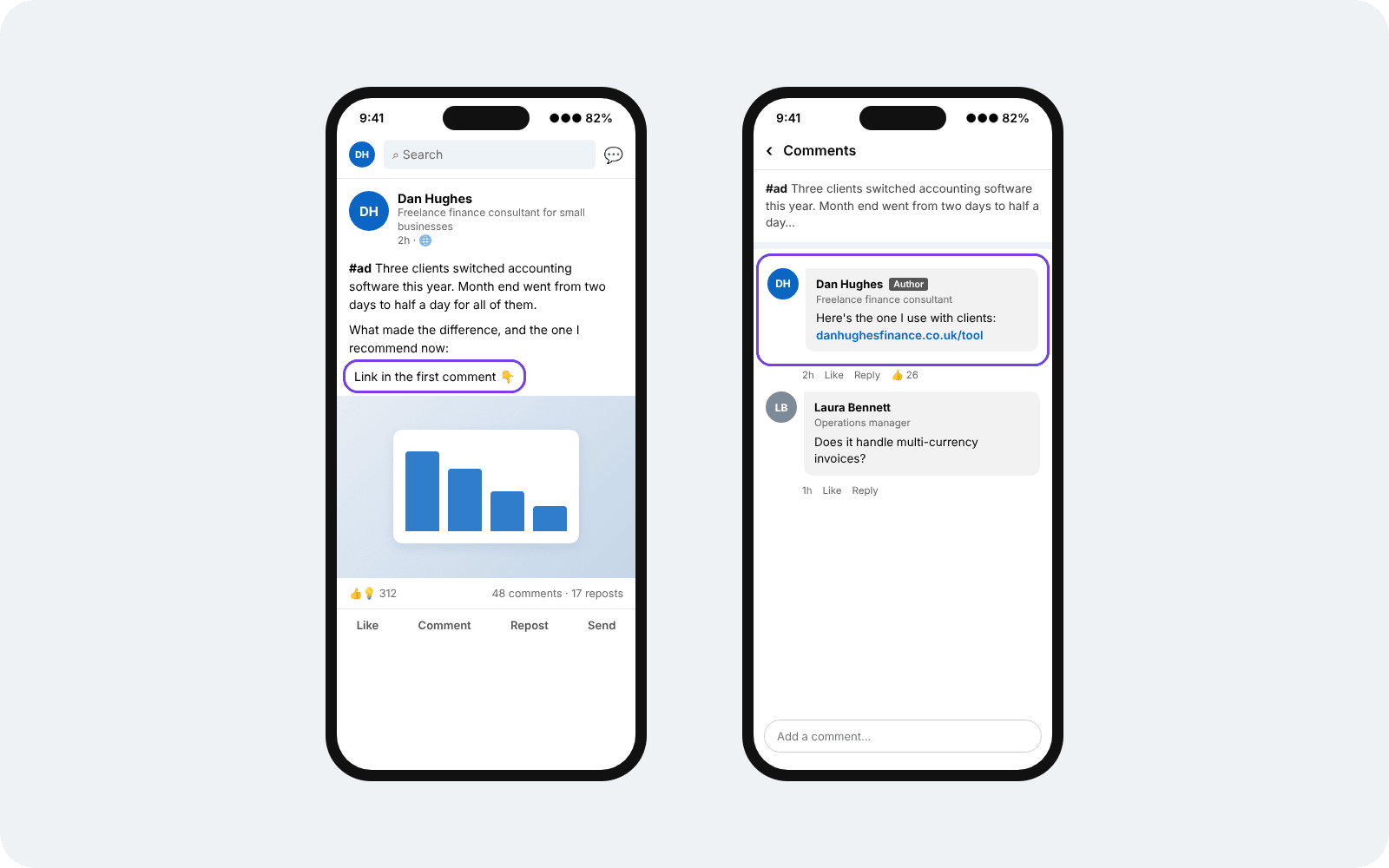
| First comment | Post publishes clean, link goes underneath | Needs a line in the post telling people to look |
| Featured section | Permanent, sits near the top of your profile | Limited to a few items, so choose carefully |
| Profile website field | Always visible, no context needed | One link only |
| Newsletters | Sent to subscribers, links allowed throughout | Requires consistent publishing to build an audience |
| Direct messages | Highest intent, lowest volume | Unsolicited pitches breach the platform rules |
Newsletters deserve more attention than they get. Subscribers opt in; the format supports longer explanations, and links sit naturally inside the content rather than bolted onto it.
Comments are where many experienced users put links. The post itself carries the insight, then the link goes below with a line explaining what it leads to.
Messages need a rule of thumb. If someone asked, send it. If they did not, do not.
Groups exist here too, though they sit quiet compared to the ones running on Facebook, where the same professional topics attract far more discussion.
How to set up
- Rewrite your headline and about section first
People check who you are before they trust a recommendation. Your headline should name what you do and who you help, and your 'about’ section should explain why you know the subject. Brands read both when reviewing your application, so this does double duty.
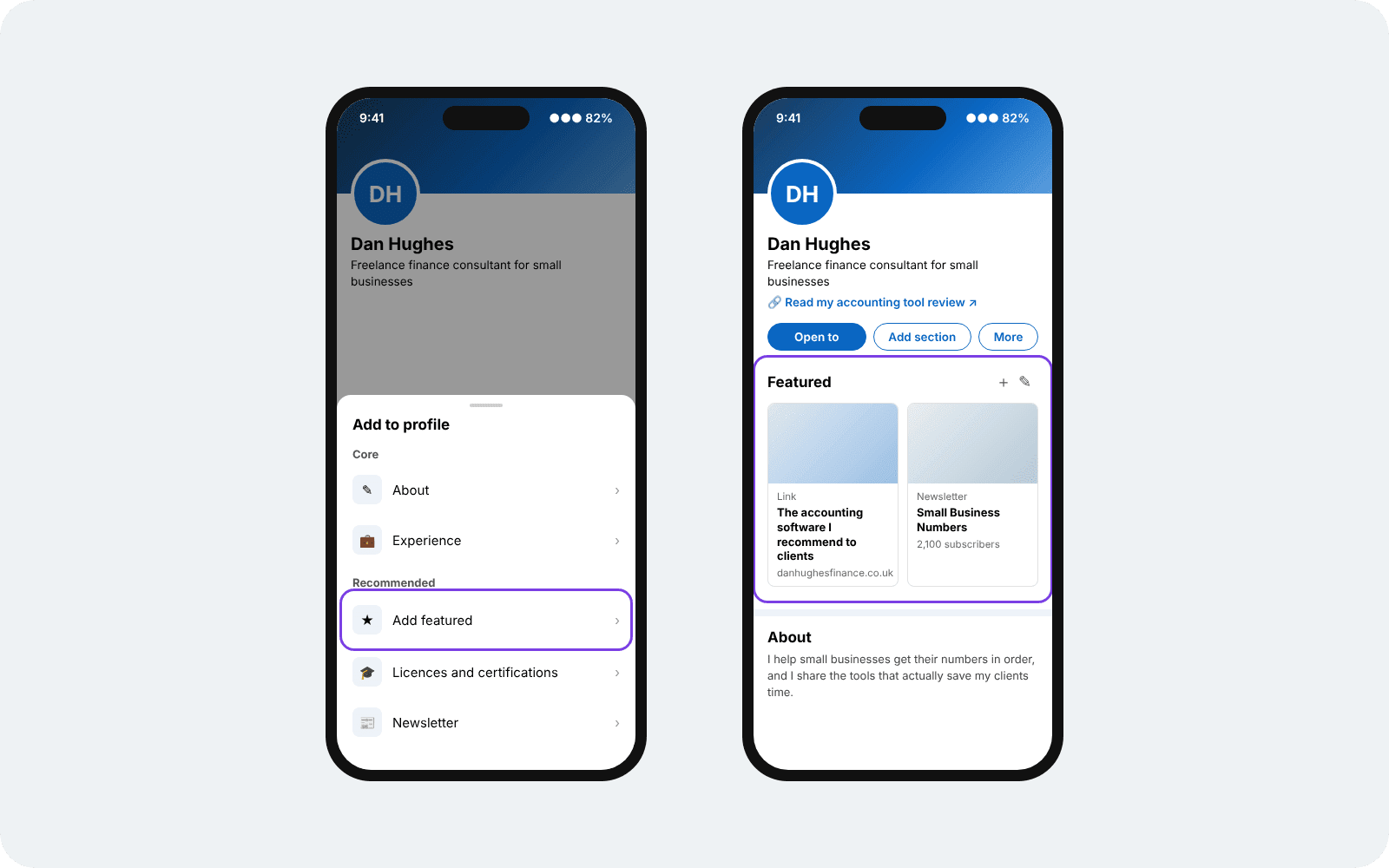
- Set up your Featured section
The Featured section sits near the top of your profile and holds links permanently. Pick the two or three that matter rather than filling it, since a crowded featured section reads as a shop window.
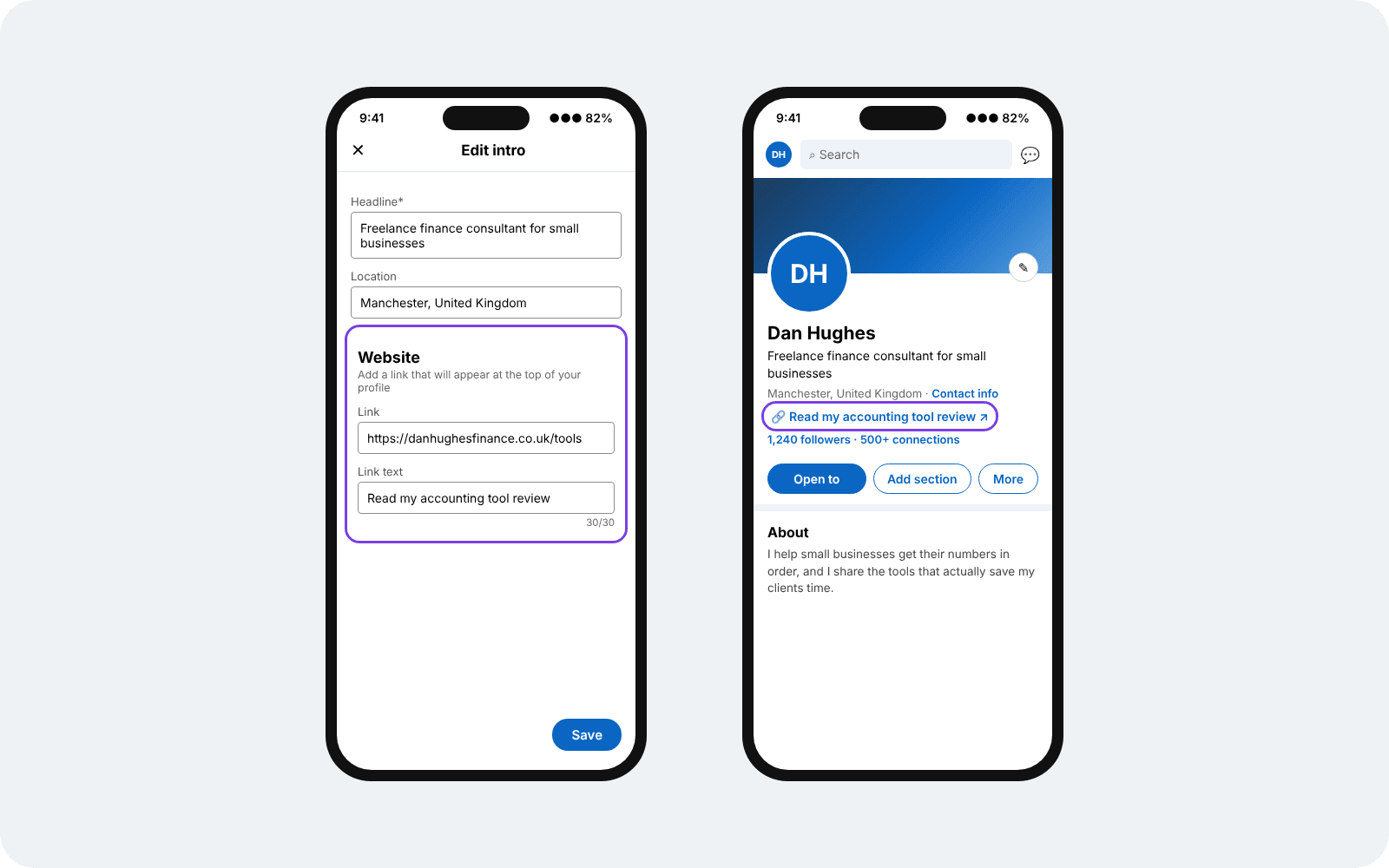
- Rename your profile website field
The website field takes a custom label, so a link showing ‘Free trial’ or 'Read the review’ outperforms one showing a bare URL. It sits at the top of your profile, under your headline, where every visitor sees it.
- Decide where posts publish from
A personal profile carries more reach than a company page here, since the feed favours people over brands. Publish from your profile and keep a company page for anything requiring a business identity.
- Join a network and expect questions about traffic
Applications ask where your audience comes from. A LinkedIn profile counts, and yours goes further when you can point to post engagement, a newsletter subscriber count or a track record in the sector.
- Create your link and check it lands
Generate a tracking link for the product page you want people to reach. Post it to your featured section first, click through as a visitor would, and confirm the click appears in your reporting.
Check what runs in your sector before committing to one. The Advertiser Directory lets you filter programmes by category to see which software and service brands pay commission.
Registration is free. Create your free Awin publisher account and see what fits your sector.
What earning on LinkedIn looks like
The money behaves differently here, and it changes how you judge whether something is working.
- Commission recurs. Software billed monthly often pays you for the life of the subscription rather than once at signup. One customer staying two years can be worth more than a hundred consumer sales.
- Order values run higher. A team licence, a training course or a professional service costs more than anything sold through a lifestyle account, so a smaller number of conversions still adds up.
- Decisions take longer. Someone reads your post, books a demo, discusses it internally, then buys six weeks later. That makes cookie windows matter more here than on any other platform.
- The signals change too. Likes tell you almost nothing here. Profile visits, saved posts and someone messaging to ask a question are the things that come before a sale.
Give it three months before drawing conclusions. Consumer platforms tell you within days whether a post worked. LinkedIn takes a quarter to say anything useful, which is why the early signals above matter more than the sales figure.
Finding affiliate partners on LinkedIn
Brands run the same search in reverse. LinkedIn is where a lot of B2B affiliate recruitment happens, because the people who write credibly about a category are visible and reachable there.
What advertisers tend to look for:
- Subject credibility over follower count, since a consultant with 3,000 connections in one industry beats a generalist with 30,000
- Evidence of engagement, meaning comments and conversation rather than likes
- Existing coverage of the category, so the recommendation reads as a continuation rather than a departure
- A newsletter or publication, which shows an audience that opted in
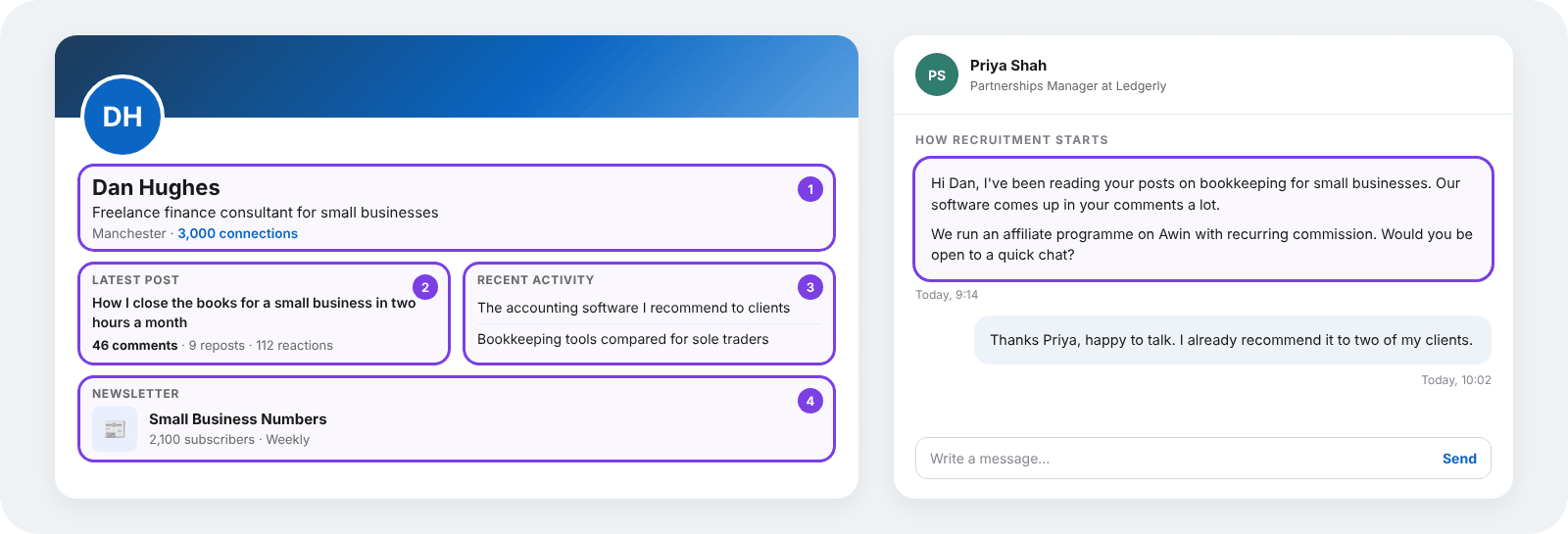
Recruitment tends to start with a message rather than an application. Brands approach people already writing about the problem their product solves, which is why publishers who post consistently get found without pitching. Flat fee arrangements work on different terms, set out in our influencer partnerships hub.
Setting up an affiliate programme yourself works differently. See pricing for brands to find out what it costs.
Disclosure on LinkedIn
Commercial content has to read as commercial before someone gets into it. LinkedIn offers no built-in label, so every word of that is yours to write.
- Say it in the post, near the top, before the ‘See More’ cut hides it
- Stick to "ad" or "#ad", which the ASA accepts where terms like affiliate and gifted fall short
- Repeat it in the comment whenever the link sits below the post rather than inside it
- Include it in newsletters, on every edition carrying a link
Credibility is the whole currency. Readers who discover the commercial relationship later will discount everything you post afterwards.
The ASA publishes detailed guidance on labelling affiliate content.
LinkediIn affiliate marketing FAQs
Can you post affiliate links on LinkedIn?
Yes. LinkedIn has no rule against affiliate links. What it does police is spam, misleading claims and automation, so links inside genuinely useful posts are fine while mass messaging is not.
Does LinkedIn have its own affiliate programme?
Yes. LinkedIn Learning runs one, paying a flat amount for free trial signups and a percentage on individual course purchases. It covers LinkedIn's own courses only, and availability depends on your country. Promoting other brands on the platform means joining an affiliate network instead.
How many connections do you need?
No minimum applies. Relevance carries more weight than reach here, and a few thousand connections in one industry will produce more than a large general following.
What products work best on LinkedIn?
Software, courses, certifications and professional services. Anything bought at work, particularly on a subscription, since those pay recurring commission.
How long before you see results?
Longer than other platforms. Buyers research, involve colleagues and often run a trial first, so a click in January can become a sale in March. Three months is a fair point to judge whether it is working.
Your first month on LinkedIn
Pick one product you use at work and would recommend without commission attached. Write a post about the problem it solved rather than the product itself, then put the link in the comments.
Repeat that weekly to build the habit, and judge the results at three months. The people who buy through LinkedIn are the ones who read three or four of your posts first.
Software and service brands run programmes across the network. Sign up and start earning commission