Masterclass: Reviving an Affiliate Program
Written by Richard Towey on 12 minute read
Affiliate program isn't delivering the growth you expect? Start the turnaround with some quick pointers from RevWise and The Bottle Club.
Want to refresh your affiliate program?
Explore Awin’s plansNot all affiliate programs are growth machines, firing on all cylinders, driving businesses forward, and spearheading their marketing mix.
Some are either dead in the water or in need of a refresh. And if you’ve found yourself managing a program in either camp, it can be hard to draw up a list of priorities.
Recently, we explored the common pitfalls that prevent growth, the quick and long wins, and the science of optimization with an agency that really knows how to breathe life into a program.
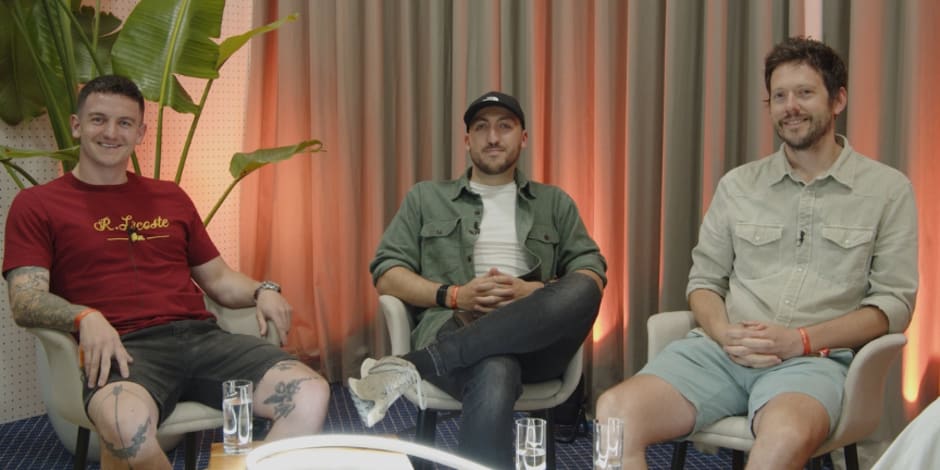
The latest guests on Awin-Win Marketing Podcast, Gary Winter and Jamie Brusey, Co-Founders of leading affiliate agency RevWise, have truly harnessed the power of Awin’s platform by using it to drive growth for a host of SMEs.
One of the beneficiaries is Tim Martin-Harvey, Head of E-Commerce at premium alcohol retailer The Bottle Club, who has worked closely alongside RevWise to bring its previously stagnant affiliate program up to speed.
The program is now working so well, they can deliver a Masterclass on it. Listen to the episode or read our write-up for a quick rescue plan.
Step #1 Expand into new stages of the funnel
The Bottle Club is your typical online reseller. Its audience knows what it wants, so its role is to connect people with the products they’re searching for - an ideal assignment for affiliate marketing. But here’s where it went wrong.
Tim: “We had quite an off-the-shelf affiliate program beforehand. Originally we were on Webgains, and then we moved over to Awin and just had a very basic platform. When we met RevWise, they went through the platform and just made us realize how much we were missing out on.”
Tim and his team made the common mistake of seeing affiliate marketing as a side quest (“not something you need to be focused on”), which led to inefficient spend and stagnation.
Faced with the task of auditing a “very basic” program, RevWise immediately saw the opportunity for switching up the publisher mix and covering new areas of the customer journey. A reminder of some of the biggest partner types in each phase:
- Pre-purchase: coupon sites, cashback, editorial partners
- Purchase: tech partners
- Post-purchase: loyalty partners, brand partnerships
Tim: “Affiliate is always synonymous with discounters, voucher codes, last click… All of the things that we think about are really owning that pre-purchase phase. Actually, affiliate is cross-channel. Post-purchase is something we now focus on massively. Point of purchase as well.”
Adding extra tiers to The Bottle Club’s program by introducing new partners in the purchase and post-purchase phases gave RevWise the space to add new strategies.
Jamie: “We both appreciate that affiliates can't work in a vacuum. You need to consider the full marketing mix. So it's not just publisher types, but we need to consider what you're doing with the other channels and how we can optimize those as well.”
Gary: “Quite often, let's say 70-80% of the brands we meet say, ‘Our affiliate program is not giving us value. We just have partners that we feel are maybe extracting more value than they're giving us, and we're thinking about shutting the whole thing down. And we've tried this and this.’ What we do is to keep what they have, but also build on top of it massively.”
Step #2 Activate the long tail
One of RevWise’s “big hooks” for SMEs is to go after the long tail of content publishers. This is to improve awareness while driving sales, all in a cost-efficient way.
Previously, that area of the partner mix was dominated by bloggers. But it now factors in micro-influencers on platforms like Instagram and TikTok, which have reinvented the creator marketing landscape by building highly engaged audiences without necessarily racking up millions of views.
The Bottle Club was the right type of business to pitch to blogs like BBC Good Food and outlets much lower down the traffic tables that would still bring accumulative value. It’s far from an easy or quick fix, but Gary believes the rewards could not be more clear.
Gary: “Those long-tail [partners] might have a hundred thousand monthly visits, but they'll be the most engaged partners. When we've got something going on, we can just chuck them an update or maybe send them some product and get them posting. And doing it all on the CPA, that's like the gold mine to most marketing directors.”
Due to the benefits of The Bottle Club’s content activity, whether through long-tail publishers or legacy media brands, RevWise has even picked up the baton left by the brand’s PR agencies to extract extra value from links that are already there.
Tim: “I think brands forget that those advertorials can be updated as well. I didn't know that until speaking to you.”
Gary: “The PR agency might just stick the link up there and move on... But if the brand is focused on tracking sales, and it [the link] is actually below the fold, we might speak to them [the publisher] and say, ‘Hey look, we're below the fold on this gin gifting article. What would it take and what do you need to get us up the page?’ Whether it's paid placement, a higher CPA, whether we need to send products or educate them… So they can improve the content.”
Step #3 Do things “that would make most marketing directors go completely insane”
In its early discussions with RevWise, Tim and The Bottle Club were learning new things about the suitability of its commercial model.
Despite previously chasing clicks (cost per click) and impressions (cost per impression), it found much better alignment with paying on hard sales (cost per acquisition).
Tim: “In both of those models [CPC, CPI], you are not paying for the sale. You are paying for the visibility of your brand. Which is great if you're in a growth model and trying to make yourself visible. But we are selling everybody else's product. People already know what they're looking for.”
Challenging that area of the strategy was bold. The Bottle Club saw “crazy” growth on Google Shopping around the time of the pandemic, when alcohol sales boomed as families were forced to stay home.
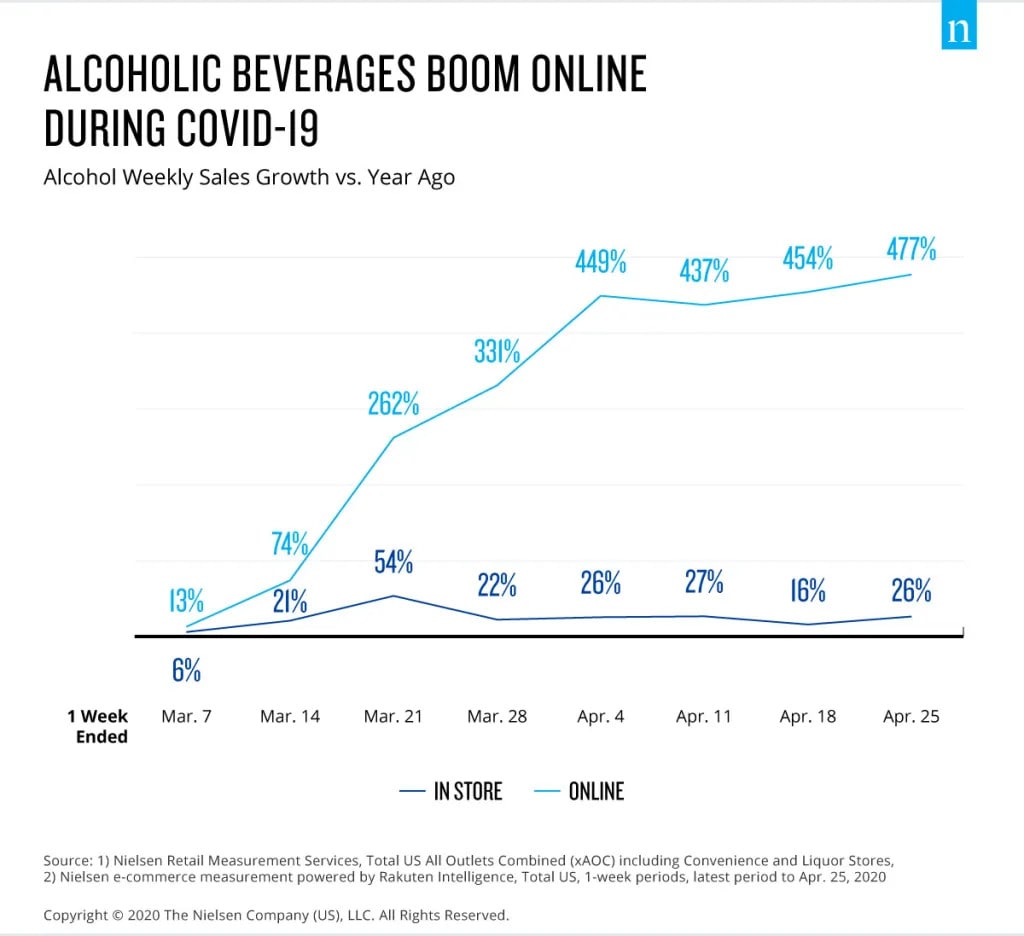
But as Tim points out, some commercial models don’t make sense if they’re being weighed down by external factors.
Tim: “If you are operating on a 10x return on ad spend (ROAS), a 10% cost per acquisition, and between a 20-30% margin, you need to look at what that cost is against the margin… The problem was as you scale, you don't necessarily know what you need to be doing.”
Inefficiencies from the advertising to the warehouse led to unprofitable growth. By the time the lockdowns ended, The Bottle Club had renewed its focus on profitability and started developing a CPA mindset. (“There's no point being a high-revenue business if you've got no profit.”)
The Bottle Club bravely turned off Google Shopping spend through Google and also put an end to its spend on Meta. It was a hard stop, until RevWise presented a solution via the affiliate channel. By activating CPA-driven comparison shopping services (CSS) to manage various campaigns on platforms like Google Shopping, The Bottle Club found more cost-efficient places for its products and only paid on sales, rather than visibility.
Gary: “Like a lot of lower-margin resellers, they don't have all the margin to work with as a direct-to-consumer brand. They weren't properly leveraging CSS partners in their affiliate program. So we came along and said, ‘Hey, they've got some there, but what work is being done strategically with these partners to get them a really transparent feedback loop?’”
Tim: “We're still doing Google Shopping because that is where our customers are looking for results. But we're doing it on a CPA model, using Redbrain and Shopify as our two main partners, and CSS partners… Turning that [Google Shopping] off has been the big change. We saw an initial drop, but now we're really tracking against last year with a considerable lack of spend and a huge increase in profitability.
Gary: “He [Tim] did something so radical that it would make most marketing directors go completely insane. Because it seems incredibly brave. In his case, being a multi-brand retailer and sometimes struggling with PPC profitability, just to turn that off and trust that the affiliate program that's now more mature is going to pick up the slack, was an incredible live experiment.”
Thankfully, it couldn’t have gone better for The Bottle Club, and Tim would even recommend others take a similar decision if the chance arises.
Tim: “I challenge any brand to really look at any of their channels. And I'm not saying turn it off, because obviously that was a bold move from us. But I do think sometimes if you're trying to work out the relevance of something, the only way of seeing if it works is not having it.”
Step #4 Find the right platform
We got the inside track on a few of RevWise’s affiliate program recovery missions in 2024, when it saw exponential growth after becoming a go-to affiliate agency for SMEs, just like The Bottle Club.
One of its tricks was to find a platform that allowed its advertisers to scale. As well as having to do more with less budget, SMEs have a few unique requirements:
- Hassle-free integrations: When it comes to running ecommerce plugins, they need quick and easy integrations that require limited developer time.
- Access to partners: SMEs need access to any partner that can add value to their program, regardless of how much revenue they bring to the table.
- Influencer setup: SMEs want to build CPA-driven influencer networks with quick, easy, and frictionless creator onboarding.
- Commission control: For instant changes and testing new strategies, SMEs need to be able to quickly change their commission rates as and when needed.
RevWise managed to grow a number of new clients by applying its usual attention to detail and choosing Awin as its network partner.
One such advertiser was Discount Dragon, which migrated to Awin after experiencing limitations with its previous network, including inadequate support for dynamic commission groups and slow bug resolution.
Enhanced partnership terms and features like commission control gave the brand what it needed to return to strong revenue growth and consistent month-on-month increases in net new customer acquisition. RevWise credits this success to capabilities unavailable on the previous platform.
As for The Bottle Club, it’s found its own gains by migrating to Awin.
Tim: “One of the reasons we moved to Awin is we were having loads of fraud or super high costs that we couldn't actually attribute to anything. Bringing in proper deduplication, for me, was a real selling point of Awin, and having you guys go and manage the validation and also challenge publishers because they weren't really involved in that sale.”
Step #5 Segment and nurture the customer base
The Bottle Club’s new lease of life in the affiliate channel has coincided with the brand upping its segmentation game to cater to each individual’s needs.
Previously out of the picture, affiliates now have a role to play here, especially when it comes to nurturing customers. That process is triggered by the same question, where each customer is asked, ‘Is this purchase for yourself, a gift, or is it a trade buy?’
Tim: “The reason that's so important to us is that when you start looking at the data and your customer segmentation, the repeat purchase rate of gifting customers is either annually or in key buying periods. If you're a repeat purchaser, it’s actually 60 days, 90 days… That means the customer lifetime value and cost of acquisition are different.”
That segmentation is key for channels like email marketing, from which gifting customers, who buy for others and have zero care for new releases, are excluded.
Tim: “Now that we've built a cohort of gifting customers and self-consumers, then we can start building that audience into affiliates and say, ‘OK, where are the lookalike audiences and the publishers that can get more of these gifting customers?’ It's like when you build out key segments of your business and then apply it to all of your channels, both in email and in affiliate. It's a really exciting time.”
Exciting times, indeed. But for RevWise, a fast-growing agency with programs to fix, it’s business as usual.
Gary: “Our sales and partnerships team are meeting dozens of brands every week, and I see the same stuff coming up. Even some pretty big companies, all the way down to smaller ones, are frustrated with their program versus what they know is possible, and they have a hunch, let's say, that it could be better. They then hopefully turn that hunch into, ‘OK, this is a reality now. The channel is doing all the things that we know it can do’”
Want to refresh your affiliate program?